Grappling with innovation and changing consumer attitudes is second nature to marketers, who have already lived through many technological shifts over the past two decades. But forecasting where things are going is especially hard when it comes to modern AI, which has such unusual, non-deterministic properties. You can’t just extrapolate from the state of AI today to understand where AI is going to be in five years (or one…); during this sort of a platform shift, you need to take a deeper first-principles look.
Some things won’t change. Consumers will always want products, services and experiences that resonate and meet their needs. Marketers will always want easier, faster and more effective ways to connect with consumers. But the technologies that mediate that relationship are primed to shift in the coming years in major, unprecedented ways — impacting how marketers do their work, and the customer experiences they’re able to deliver.
How the marketer experience will evolve: Less rote work, more creativity
The history of marketing is built around constant evolution. But the scale and complexity of the change triggered by the rise of modern AI may test even seasoned customer engagement teams. To thrive, marketers need to open themselves up to new skills, perspectives and capabilities that will allow them to do more with less.
This change is already underway. As marketers take advantage of AI, they’re spending less time on rote tasks (like manual message creation) and more on strategy and creative work — from brainstorming innovative campaigns to deepening their testing and optimization strategy. These efficiency gains will grow as AI becomes a more prominent part of the customer engagement process, allowing brands to set goals and guardrails, then empowering their AI solutions to independently consume context, make decisions, and act on marketers’ behalf.
Today, that might look like training basic agents on your brand’s voice to ensure that message content is consistently on brand. But as we gain trust in AI’s ability to operate unsupervised over longer time horizons and to handle complex projects, more marketers will be able to shift their focus to strategy and effective management of the AI resources at their disposal to enable AI decisioning and other essential optimizations.
How team experiences will evolve: Humans and AI agents working side by side
Marketing is a collaborative art, where building a successful customer engagement program often depends as much or more on marketers’ ability to work together effectively as it does on their individual skills. But while AI may help marketers to work with internal stakeholders more effectively, its biggest unlock is the ability to be a direct “teammate” to marketers themselves. And by leveraging AI’s ability to create countless agents that can support customer engagement, even entry-level marketers will likely find themselves essentially operating as a “manager” of a team of autonomous subordinates.
Imagine creating a whole team of agents, with one tasked with personalizing product recommendations, one that QAs messages to ensure they’re formatted and built correctly, one that handles translations and another that reports back at the first sign of campaign underperformance. By supplementing your existing capabilities with agents, you aren’t just reducing the burden on yourself and your human colleagues; you’re also building a digital institutional memory, training these “teammates” with context and goals and reward functions to be able to keep supporting your efforts and driving value even as human coworkers come and go and your team’s goals shift and evolve with time.
AI and customer engagement: How brands can win the future
For years, marketers have sought the ability to truly personalize communication on a 1:1 basis across an audience of millions, and to do it swiftly, efficiently and at scale. This was the Holy Grail of marketing, but due to the limitations of technology it simply wasn’t achievable for even the most advanced teams. That’s all being made possible by AI decisioning, a powerful new type of functionality that can force multiply brands’ marketing performance and creative impact while delivering what their customers want and need.
Previously, a brand trying to win back lapsing customers had a long journey ahead of it. It might start by leveraging a churn propensity model to identify which customers are most likely to churn, then use a product prediction model to figure out what products to highlight in order to tempt them to return. From there, they’d need to run a series of A/B tests in order to figure out which offers and channels will work best. But while taking that approach is a traditional best practice, it only got brands so far — they could target micro-segments on the right channel with the right offer, but truly 1:1 engagement was still out of reach.
AI decisioning represents a new way forward when it comes to personalization. This approach leverages reinforcement learning, where AI agents learn from consumer behavior and learn over time how to maximize rewards (such as conversions or purchases) in order to optimize the KPIs that have the biggest impact through ongoing, autonomous experimentation. That means AI decisioning can seamlessly determine not only the next best product offer for those lapsing users, but also the best channel, the optimal time of day or day of week, the frequency that makes the most sense, the message most likely to drive ideal outcomes, and any other dimension that could impact whether a recipient takes a given action.
Even better, because AI agents are constantly experimenting in the background, the model can continuously adapt to shifting consumer preferences and behavior. And because these models use first-party data about every available customer characteristic, AI decisioning makes it possible to engage with individuals in a true 1:1 way, rather than relying on segments. The result is exceptional relevance and responsive experiences for individual consumers, something that’s only possible because of AI.
Final thoughts
With any major technology shift, it isn’t enough to just plan for the obvious outcomes — you must ensure you can react effectively to the changes that no one knows are coming. To succeed, brands need to pay careful attention to the arc of this new technology. Responding to a platform shift can’t be a one-and-done thing, and brands that create a five-year plan without building in regular pulse points and adjustments are going to quickly find themselves falling behind their more agile, flexible peers.
To see the full benefit of AI in their customer engagement efforts, brands also need to look beyond AI. After all, AI isn’t a shortcut, it’s an amplifier — and the AI you use for customer engagement is only ever going to be as good as the infrastructure supporting it. An exceptional AI feature isn’t going to feel exceptional to consumers if it’s built on architecture that can’t take action in real time or can only deliver experiences in a single, prescribed way. Make sure your AI tools are built on a strong foundation and have the infrastructure they need to shine; otherwise, you may never fully achieve what’s possible.
Curious to learn more about how Braze is thinking about AI and customer engagement? Check out our BrazeAIᵀᴹ page.
https://i0.wp.com/dubadosolutions.com/wp-content/uploads/2025/11/Braze-20251104-selheader-v2-scaled-4WyNEg.jpg?fit=2048%2C1152&ssl=111522048http://dubadosolutions.com/wp-content/uploads/2017/05/dubado-logo-1.png2025-11-04 12:00:002025-11-04 12:00:00Winning the platform shift by Braze
But no major AI platform has confirmed that they use it.
Not yet, anyway.
And there’s no evidence that any major large language model (LLM) actually uses it when crawling.
So, why are some SEOs and site owners already adding it to their sites?
Because LLM traffic is projected to explode over the next few years.
Which means AI models could soon become your biggest traffic source.
Remember: robots.txt was once optional, too.
Today, it’s essential for managing search crawlers.
LLMs.txt could follow a similar path — becoming the standard way to guide AI to your most important content.
In this guide, you’ll learn how llms.txt files work, the key pros and cons, and the exact steps to create one for your site.
You’ll also see different llms.txt examples from real sites.
First up: a quick explainer.
What Is LLMs.txt?
LLMs.txt is a plain-text file that tells AI models which pages to prioritize when crawling your site.
This proposed standard could make your content easier for AI systems to find, process, and cite.
Here’s how it works:
You create a text file called llms.txt
List your most important pages with brief descriptions of what each covers
Place it at your site’s root directory
In theory, LLM crawlers would then use the file to discover, prioritize, and better understand your key pages
For example, here’s what Yoast SEO’s llms.txt file looks like:
Does LLMs.txt Replace Robots.txt?
Short answer: No.
They serve different purposes.
Robots.txt tells crawlers what they’re allowed to access on a site.
It uses directives like “Allow” and “Disallow” to control crawling behavior.
LLMs.txt suggests which pages AI models should prioritize.
It doesn’t control access — it just provides a curated list. And makes it easier for crawlers to understand your content.
For example, you might use robots.txt to block crawlers from your admin dashboard and checkout pages.
Then, use llms.txt to point AI systems toward your help docs, product pages, and pricing guide.
Here’s a full breakdown of the differences:
LLMs.txt
Robots.txt
Purpose
Provides a curated list of key pages that AI models may use for information and sources
Sets rules for search engine crawlers on what to crawl and index
Target audience
LLMs like ChatGPT, Gemini, Claude, Perplexity
Traditional search engine bots (Googlebot, Bingbot, etc.)
Syntax
Markdown-based; human-readable
Plain text, specific directives
Enforcement
Proposed standard; adherence is not confirmed by major LLMs
Voluntary; considered standard practice and respected by major search engines
SEO/AI impact
May influence AI-generated summaries, citations, and content creation
Directly impacts search engine indexing and organic search rankings
Layout and Elements
So, what goes inside this file — and how should you structure it?
LLMs.txt should be created as a plain-text file and formatted with markdown.
Markdown uses simple symbols to structure content.
This includes:
# for a main heading, ## for section headings, ### for subheads
> to call out a short note or tip
– or * for bullet lists
[text](https://example.com/page) for a labeled link
Triple backticks (“`) to fence off code examples when you’re showing snippets in a doc or blog post
This makes the file easy for both humans and AI tools to read.
You can see the main elements in this llms.txt example:
# Title
> Description goes here (optional)
Additional details go here (optional)
## Section
- [Link title](https://link_url): Optional details
## Optional
- [Link title](https://link_url)
Now that you know how to format the file, let’s break down each part:
Title and optional description at the top: Add your site or company name, plus a brief description of what you do to give AI systems context
Sections with headers: Organize content by topic, like “Services,” “Case Studies,” or “Resources,” so crawlers can quickly identify what’s in the file
URLs with short descriptions: List key pages you want prioritized. Use clear, descriptive SEO-friendly URLs. And add a concise description after each link for context.
Optional sections: Consider adding lower-priority resources you want AI systems to be aware of but don’t need to emphasize — like “Our Team” or “Careers”
To put all the pieces together, let’s look at some examples.
Here’s how BX3 Interactive, a website development company, structures its llms.txt file:
It features:
The company’s name
Brief description
List of key service pages with URLs and one-sentence summaries
Top projects and case studies
Citation and linking guidelines
BX3 Interactive also includes target terms and specific CTAs for each URL.
If adopted, this approach could shape how LLMs reference the brand, guiding them toward BX3 Interactive’s preferred messaging and phrasing.
LLMs.txt files can also be more complex, depending on the site.
Like this example from the open-source platform Hugging Face:
It organizes hundreds of pages with nested headings to create a clear hierarchy.
But it goes well beyond URL lists and summaries.
It includes:
Step-by-step installation commands
Code examples for common tasks
Explanatory notes and references
This way, AI systems would get direct access to Hugging Face’s most valuable documentation without needing to crawl every page.
This could reduce the risk of key details getting missed or buried.
Keep in mind that the ideal structure depends on the scope of your site. And the depth of information you want AI to understand.
It’s possible that an llms.txt file could boost your AI SEO efforts over time.
But that would require widespread adoption.
No major AI platform has officially supported the use of llms.txt yet.
And Google has been especially clear — they don’t support it and aren’t planning to.
But big players like Hugging Face and Stripe already have llms.txt files on their sites.
Most notably, Anthropic, the company behind Claude, also has an llms.txt file on its website.
If one of the leading AI companies is using it themselves, it could mean they see potential for these files to play a bigger role in the future.
Note: While Anthropic has an llms.txt file on its site, it hasn’t publicly stated that its crawlers use or read these files.
Bottom line?
Treat llms.txt as a low-risk experiment, not a guaranteed way to boost AI visibility.
Potential Benefits
Right now, the benefits are theoretical.
But if llms.txt catches on, you could benefit in multiple ways:
Control what gets cited: Spotlight your blog posts, help docs, product pages, and policies so AI tools reference your best pages first instead of less important or outdated content
Make parsing easier: Your llms.txt file gives AI models clean markdown summaries instead of forcing them to parse through cluttered pages with navigation, ads, and JavaScript
Improve your AI performance: Guide AI models to your most valuable pages, potentially improving how often and accurately they cite your content in responses
Analyze your site faster: A flattened version of your site (a single, simplified file listing your key pages), makes it easier to run a keyword analysis and site audit without crawling every URL
Key Limitations and Challenges
The skepticism around llms.txt is valid.
Here are the biggest concerns:
No one’s officially using it yet: No major platforms have announced support for these files — not OpenAI, Google, Perplexity, or Anthropic
It’s a suggestion, not a rule: LLMs don’t have to “obey” your file, and you can’t block access to any pages. Need access control? Stick with robots.txt.
Easy to game: A separate markdown file creates an opportunity for spam. For example, site owners could overload it with keywords, content, and links that don’t align with their actual pages. Basically, keyword stuffing for the AI era.
You’re showing competitors your hand: A detailed llms.txt file hands your competitors a lot of info they might have to use dedicated tools to get otherwise. Your site structure, content gaps, messaging, keywords, and more.
Creating an llms.txt file is pretty simple — even if you don’t have much technical experience.
One caveat: You may need a developer’s help to upload it.
Step 1: Pick Your High-Priority Pages
Start by selecting the pages you want AI systems to crawl first.
Pro tip: Don’t dump your whole sitemap into your llms.txt file. Focus on your most valuable pages — not an exhaustive inventory.
Think about the evergreen content that best represents what you do — your core product pages, high-value guides, FAQ sections, key policies, and pricing details.
For example, BX3 Interactive lists this web development service page first in its llms.txt file:
Why? Because it’s a core service they offer.
And by featuring it in llms.txt, they’re signaling to AI crawlers that this page is central to their business.
Step 2: Create Your File
Next, open any plain-text editor and create a new file called llms.txt.
Options include Notepad, TextEdit (on Mac), and Visual Studio Code.
Pro tip: Don’t just list bare URLs. Add a brief description for each one that explains what the page covers and who it’s for. This context could help AI understand when and how to cite your brand.
Not comfortable with markdown formatting?
Ask your developer to handle it (if you have one).
Or let an LLM do the work — ChatGPT and Claude can generate these files instantly.
Here’s a prompt to get you started:
Create an llms.txt file in markdown format using this information:
Company Name: [Your Company Name]
Company Description: [One sentence about what you do]
Important Notes (optional):
[Key differentiator or important detail]
[What you do or don’t do]
[Another key point]
Products/Services
URL: [https://yoursite.com/product-1]
Description: [What it does and who it’s for]
URL: [https://yoursite.com/product-2]
Description: [What it does and who it’s for]
Blog/Resources
URL: [https://yoursite.com/blog-post-1]
Description: [What readers will learn]
URL: [https://yoursite.com/blog-post-2]
Description: [What readers will learn]
Company Pages
About: [https://yoursite.com/about] – [Company background and mission]
Contact: [https://yoursite.com/contact] – [How to reach you]
If setup is quick and you’re curious to experiment, it’s worth doing.
Worst case, nothing changes.
Best case, you’re ahead of the curve if AI platforms start paying attention.
In the meantime, don’t neglect proven SEO fundamentals.
Structured data, high-authority backlinks, and helpful content are what help AI — and traditional search engines — understand, trust, and surface your pages.
Want to boost your AI visibility now?
Check out our AI search guide for a framework that’s already working.
http://dubadosolutions.com/wp-content/uploads/2017/05/dubado-logo-1.png00http://dubadosolutions.com/wp-content/uploads/2017/05/dubado-logo-1.png2025-11-04 01:59:392025-11-04 01:59:39Does Your Website Need an LLMs.txt File? + How to Create One
More than half of searches in 2025 don’t lead anywhere. People get answers from ChatGPT, Perplexity, and Gemini without clicking a single link.
Not showing up in those responses? You’re invisible to half the internet.
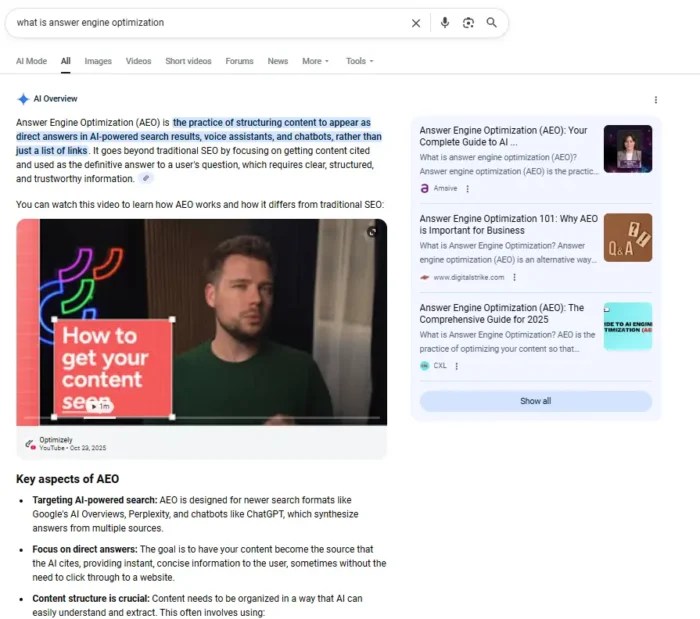
That’s where answer engine optimization (AEO) comes in. It helps your brand become the answer that AI tools deliver.
This guide breaks down how AEO works, how it compares to SEO, and what steps you can take to make your content more findable across modern search platforms.
Key Takeaways
Around 60 percent of searches now end without a click. Answer engines like ChatGPT and Perplexity deliver results without sending users to your site.
Answer engine optimization helps your content show up in AI-generated responses and voice search results.
AEO extends your SEO strategy by focusing on visibility in conversational and zero-click search environments.
To win in AEO, you need to optimize for direct questions, structured answers, user intent, and authority signals.
AI-first search is already shifting user behavior. The earlier you adapt, the more visibility you’ll protect.
What is Answer Engine Optimization?
Answer engine optimization (AEO) makes your content easy for AI tools to find and use as a direct answer.
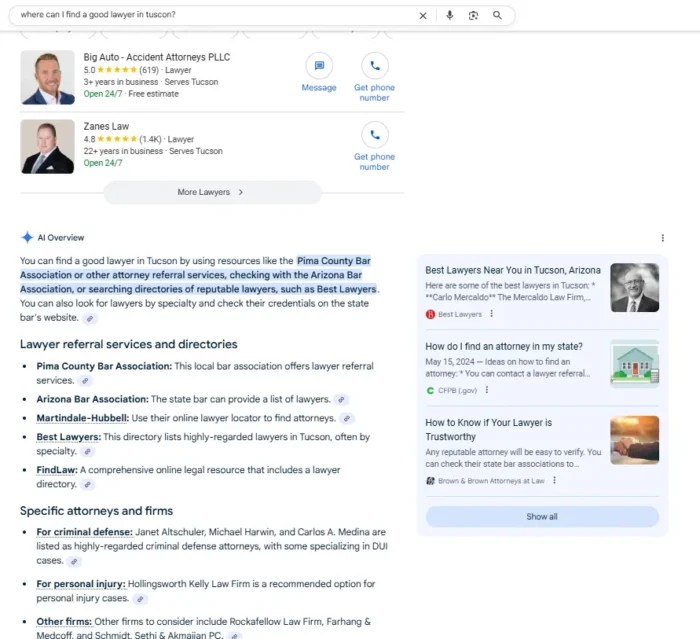
This started with rich results in Google like Featured Snippets and People Also Ask, but today, AEO is about showing up in a full ecosystem of AI-driven answer engines like ChatGPT, Perplexity, Gemini, and Google’s AI Overviews.
While there are technically still links as a part of these tools, there’s no guarantee a user will click on them.
Your content needs to match how large language models (LLMs) process information if you want to appear in those answers. This includes:
Natural language clarity
Structured data and schema markup
Topical authority and entity-level signals
Inclusion in knowledge graphs and trusted datasets
These systems rely on machine learning and natural language processing to determine what content best fits the user’s query. If your site structure and content format aren’t optimized for this, you are less likely to be cited.
AEO isn’t some future tactic. It’s how visibility works now.
Why is AEO Important?
Search has changed. It’s not just about blue links on a results page anymore. Tools like ChatGPT, Perplexity, and Google’s AI Overviews are changing how people access information and how brands show up.
The rise of these answer engines has led to a sharp increase in zero‑click searches. In many cases, users now get what they need without ever visiting a website. That means if your content isn’t optimized for those responses, you’re missing visibility.
Voice assistants like Alexa, Siri, and Google Assistant work the same way. As generative AI improves by summarizing the web, fewer sources get shown per query, putting more pressure on marketers to be the one selected.
People expect answers fast. They won’t scroll through ten links when one will do. AEO is about aligning your content to that expectation: clear answers, fast.
And the impact isn’t just on organic traffic. AEO boosts brand visibility, strengthens trust signals, and improves discoverability across AI tools and platforms. If you’re investing in SEO but ignoring answer engine optimization, you’re missing opportunities.
How is AEO Different Than SEO?
AEO and SEO work toward the same outcome (getting your content discovered) but the paths they take are different.
Search engine optimization (SEO)focuses on improving rankings within search engine results pages. That includes optimizing technical elements, matching content to user intent, building links, and improving site structure. It’s about increasing visibility across a range of possible results.
Answer engine optimization (AEO) focuses on earning the single, summarized response delivered by an AI system. These systems rely more heavily on structured answers, clarity, and content that fits within specific answer formats. You’re competing for the only spot that gets shown, not position ten.
AEO is often confused with Generative Engine Optimization (GEO), which is related but distinct. GEO focuses on creating content that gets cited by AI tools as a source. AEO focuses on optimizing existing content to be surfaced directly within the answer. Both matter, but they solve different problems.
What Are AI Hallucinations And How Can You Avoid Them?
AI hallucinations happen when tools like ChatGPT give answers that sound right but are completely wrong. This happens when AI pulls outdated, misattributed, or low-quality information when summarizing information.
In one example, users asked a chatbot for medical advice and received fabricated product suggestions. Other tools have invented studies, misquoted statistics, or pulled misleading content from forums.
The risk increases when a brand has little online authority or inconsistent information across platforms. If the AI can’t verify what’s real, it fills in the blanks and gets it wrong.
To reduce your risk of hallucinated results about your business:
Keep your website and public profiles updated with accurate, consistent information
Use schema markup and structured data to help AI interpret your content correctly
Publish expert-led, well-cited content on topics you want to rank for
Monitor where and how your brand is mentioned across platforms
Protecting your brand from hallucinations goes beyond technical fixes. It’s part of owning your visibility.
Strategies For Appearing In Answer Engines
Keywords alone won’t get you featured in AI responses. You need clear, credible, well-structured content that’s easy for machines to understand.
The strategies below are designed to help your site show up in AI summaries, voice results, and other answer-first formats.
Look at Your Existing Answer Engine Visibility
Before you start new optimizations, start by reviewing what’s already working. You may already have content showing up in AI searches like Perplexity, ChatGPT with browsing, or AI Overviews in Google.
Platforms like Ubersuggest Profound track brand and URL visibility across AI answers. These tools show what questions your site already ranks for, what sources AI is pulling from, and where gaps exist.
You can also run manual prompts in ChatGPT or Perplexity using branded and non-branded queries. Try asking questions you’d want your content to answer, and take note of what shows up.
This audit shows you where you stand and helps you prioritize. If certain pages are already being pulled into AI results, you may just need small tweaks. If others aren’t surfacing at all, you’ll know where to focus first.
Understand User Intent
Search engines, chatbots, and voice assistants all aim to solve one thing: what the user actually wants to know. That’s where search intent comes in, and it’s a foundational piece of answer engine optimization.
AI tools don’t just crawl your content. They interpret it. If your page doesn’t match the kind of answer a user is looking for, it likely won’t get picked.
Intent typically falls into four categories: informational, transactional, navigational, or commercial. But when it comes to AEO, you also need to understand how people phrase questions. “What is,” “how to,” “best tools for,” and “should I” are all common patterns.
So how can you learn the intent behind the keywords you’re targeting or ranking for? Keyword research tools, like Ubersuggest and Semrush can help.
Once you understand what search terms your website ranks for, you can dig into the most popular terms. Using Ubersuggest’s Keyword Overview tool, for example, lets you see search volume and SEO difficulty.
The keywords in the above screenshot are largely informational. The searcher is hoping to learn more about digital marketing. As we continue to scroll through the list of queries , we begin to see more commercial and transactional results.
Take “digital marketing platforms” as an example:
There’s certainly some informational intent behind the question, but it’s also possible to be commercial intent. For example, a business who is looking to subscribe to a platform may want to learn more about it so they can make the right decision.
If you’re a digital marketing agency with a platform, and you understand the intent behind that keyword, you can create content that captures the customer within the purchase journey.
Content that targets the transactional intent of this keyword may be a digital marketing platform or tool roundup. You can position your platform as the best option, or even create a post with affiliate links to other relevant platforms.
Intent matters as much as the question itself. This is why you must consider the whole picture when incorporating such keywords into your content.
Use The Direct Question/Answer Format When Applicable
If your content doesn’t look like an answer, AI tools won’t treat it like one. That’s why formatting matters more than ever in answer engine optimization.
Start by identifying the questions your audience is asking. Then give them a direct response near the top of your content, ideally within the first few sentences or paragraphs.
Use clear H2 or H3 headings for common queries. Add a dedicated FAQ section if your topic has multiple related questions. Bullet points, concise summaries, and short paragraphs all help AI models parse your content more accurately.
You’re not just helping users skim. You’re helping machines understand what your content is trying to say and where it fits.
Google’s AI Overviews, People Also Ask, and tools like Perplexity and Gemini all pull from content that’s been structured clearly and answers a defined question.
This is one of the simplest changes you can make to support AEO, and it pays off fast.
Set Up and Update Business Profiles Whenever Possible
Answer engines don’t just scan your website. They also pull from structured data across the web. That includes business directories, local listings, and public profiles.
Tools like ChatGPT and Perplexity can surface business info from places like Google Business Profile, Yelp, Apple Maps, and Bing. If your data is missing or inconsistent, your brand may be excluded from results.
Make sure your listings include accurate details like name, address, phone number (NAP), hours, and website. Add photos, reviews, and categories where possible. These signals all feed into the authority and relevance AI models look for.
Don’t treat this as a one-time setup. Keep listings up to date, especially if your business has multiple locations or seasonal changes.
The goal is to make it easy for AI systems to confirm your legitimacy and context. You’re giving them structured proof of who you are and what you offer.
Become an Authority In Your Industry
AI systems scan for more than keywords. They look for trusted voices. If your brand is consistently cited, reviewed, and linked to across the web, you’re more likely to be featured in AI-generated responses. When we surveyed a group of marketing professionals who said that optimizing their content to appear in chatbot responses has been a major priority for them, 34 percent had the top goal of building brand awareness and loyalty.
That trust is built through authority. This includes third-party mentions, earned backlinks, expert-led content, and consistent appearances in respected directories or roundups.
Authoritative brands are also more likely to be surfaced in zero-click search, local packs, and answer engine results. Why? Because these platforms want to deliver credible information. If your site has proven expertise on a topic, it’s more likely to be chosen.
To build that authority, focus on publishing effective content, earning brand mentions in your niche, and contributing insights on third-party platforms. Guest posts, research, and interviews can all help grow your presence.
This takes time, but it compounds. The stronger a thought leader you are seen as, the harder it is for AI tools to ignore your content.
Incorporate AI Into Your Content Marketing Strategy
AI is changing how people search and how we create content. Used correctly, it can help you build pages that are more likely to surface in answer engines.
Start by using tools like ChatGPT to test your topic coverage. Ask sample questions your audience might type into an AI search. What comes up? If your site isn’t mentioned, or the answers are thin, you’ve found a gap to fill.
Many marketers are already leaning into this. In a survey we ran, over 81 percent of professionals optimizing for AI responses said they had been incorporating AI into their business processes for six months or more.
The top use cases included improving efficiency, sparking innovation, and enhancing customer experience. But AEO-focused content creation is where AI can deliver quick wins.
You can use AI to generate question-based outlines, draft summaries, or test how clearly your answers come across. Just don’t skip the human layer. Tools can help you move faster, but high-quality content still requires expertise.
Implement Schema Markup
Schema markup helps AI tools understand your content better. That can make the difference between being ignored or included in an answer.
Schema is a form of structured data that tells search engines and AI systems what your page is about. It adds a layer of clarity in the background without changing how your content looks to users.
For example, if you have a FAQ section, adding FAQ schema helps Google and answer engines extract that content more confidently. The same goes for how-to schema, product schema, article schema, and organization schema.
The more structured your content is, the easier it is for AI to match it to the right query. Schema also increases your chances of appearing in AI Overviews, People Also Ask, and AI-generated summaries.
You don’t need to add schema manually. Most SEO plugins, like Yoast or Rank Math, include built-in schema tools. There are also free generators available online if you want to apply it page by page.
Think of schema as a translator between your content and the AI tools deciding what gets shown. The clearer your signals, the better your visibility.
Review and Monitor Your AEO Progress
Answer engine optimization isn’t a one-time fix. Once you implement AEO strategies, you need a plan for tracking performance and making improvements.
Set a regular schedule to check whether your content is being picked up by AI tools. Look for patterns in which pages get cited, what queries they appear for, and where your visibility drops off.
This doesn’t require complex reporting. You can track progress using a simple spreadsheet, noting the presence or absence of your brand in AI summaries across key queries.
When something stops appearing, that’s your signal to re-optimize. Refresh the content, clarify the structure, or align it more closely with search intent. If something continues to perform well, look at what’s working and replicate that approach elsewhere.
AEO is still evolving, which makes monitoring even more important. The brands that adapt fastest will stay visible the longest.
What Factors Matter Most for ChatGPT Recommendations?
We ran a study to understand why ChatGPT recommends certain brands in its responses. After testing over 80 possible factors, six rose to the top.
Brand mentions: The more your brand is cited across the web, the higher the likelihood ChatGPT will surface it.
Reviews: Quality and volume of customer reviews, especially on third-party sites, play a major role.
Relevancy: If your site’s keywords match the user’s query, and the page offers helpful context, you’re more likely to get picked.
Age: Older, more established brands tend to be trusted more often by AI models.
Recommendations: Listicles and curated “best of” roundups (even those using affiliate links) still influence ChatGPT outputs.
Authority: High-authority domains with credible backlinks and consistent content earn more inclusion in AI answers.
You can’t control every factor, but you can influence most of them by building strong, reliable content that other sites and users want to reference.
FAQs
What is answer engine optimization (AEO)?
Answer engine optimization is the process of improving your content so it appears in AI-generated answers. It focuses on clarity, structure, authority, and accuracy—so tools like ChatGPT, Perplexity, and Google’s AI Overviews can pull your content as a trusted response. It builds on traditional SEO but adapts it for zero-click and conversational search experiences.
How do I do AEO?
Start by identifying the types of questions your audience is asking. Then create clear, concise answers—formatted with proper headers, schema markup, and supporting data. Use tools to track which content appears in AI results, and optimize based on visibility gaps.
Focus on building authority and publishing quality content that answer engines can trust.
What are the key differences between AEO and traditional SEO?
AEO is about getting your content pulled into AI-generated responses. SEO is about ranking in search engine results pages. Both use similar tactics, but AEO requires more structured, answer-ready content.
Conclusion
AI is already reshaping how people search, and answer engines are gaining traction fast. If your content isn’t built for these platforms, you’re likely losing visibility—even if you’re ranking well in traditional search.
The good news: if you’ve been investing in SEO, many of the foundations are already in place. AEO simply takes it further, focusing on clarity, structure, and intent.
Tools like Ubersuggest can help you find question-based keywords, track content performance, and identify optimization gaps. From there, it’s about building better answers—and making sure they’re easy for AI to find.
Now is the time to get proactive. The longer you wait to adapt, the harder it’ll be to catch up.
http://dubadosolutions.com/wp-content/uploads/2017/05/dubado-logo-1.png00http://dubadosolutions.com/wp-content/uploads/2017/05/dubado-logo-1.png2025-11-03 20:00:002025-11-03 20:00:00AEO (Answer Engine Optimization): How to Get AI Generator to Mention my Business
Google has added a new user agent to its help documentation named Google-CWS. This is the Chrome Web Store user agent that is a user-triggered fetchers.
More details. Google posted about the new user agent over here, it reads; “The Chrome Web Store fetcher requests URLs that developers provide in the metadata of their Chrome extensions and themes.”
What are user-triggered fetchers. A user-triggered fetchers are initiated by users to perform a fetching function within a Google product.
The example provided by Google was “Google Site Verifier acts on a user’s request, or a site hosted on Google Cloud (GCP) has a feature that allows the site’s users to retrieve an external RSS feed. Because the fetch was requested by a user, these fetchers generally ignore robots.txt rules. The general technical properties of Google’s crawlers also apply to the user-triggered fetchers.”
Why we care. If you see this user agent in your crawl logs, you now know where it is from. The Chrome Web Store fetcher requests URLs that developers provide in the metadata of their Chrome extensions and themes.
https://i0.wp.com/dubadosolutions.com/wp-content/uploads/2025/11/google-cws-agent-scaled-ErMzpH.webp?fit=2048%2C526&ssl=15262048http://dubadosolutions.com/wp-content/uploads/2017/05/dubado-logo-1.png2025-11-03 16:02:452025-11-03 16:02:45Google adds Chrome Web Store user agent
Search is changing faster than ever – and 2026 may be the year it fully breaks from the past.
Over the last year, AI has reshaped how people discover, decide, and convert, collapsing the traditional customer journey and cutting touchpoints in half.
AI-powered assistants and large language models (LLMs) will handle roughly 25% of global search queries by 2026, per Gatner, replacing many traditional search interactions.
We’re already seeing the effects. Traffic from LLMs is climbing at a hockey-stick pace, signaling a massive shift in how users find information.
To stay competitive, marketers need to build strong content and experience flywheels, as answer engine optimization (AEO) and generative engine optimization (GEO) become critical priorities.
Bruce Clay, founder and president of Bruce Clay Inc., predicted:
“AI-powered search is expected to cause traffic to continue to drop for many sites, creating a disturbance in the force.”
Adopting AI isn’t optional – it’s foundational.
Yet most marketing systems weren’t designed to operate in an AI-first world.
Disconnected tools and data silos make orchestration difficult and create inconsistencies that derail performance.
To succeed in 2026, brands will need integrated, cross-functional, omnichannel systems that connect data, content, and customer experience.
Building a resilient digital presence for 2026
Preparing a brand’s digital presence for an AI-driven world means rethinking data, tools, and customer experiences while presenting a clear, consistent brand story.
The goal is to deliver personalized content and be ready for agentic experiences, where AI assistants act on behalf of users.
This shift begins with the evolution of search itself.
The biggest change is moving away from a simple query-and-response model to a more dynamic, reasoning-driven conversation.
Traditional search was like a game of chess – discrete and predictable. AI search, on the other hand, is more like a jazz concert – continuous and fluid.
The experience has shifted from browsing lists and visiting websites to receiving direct, synthesized answers.
Instead of matching keywords to an index, AI uses query fan-out, which involves:
Breaking queries into components.
Analyzing multiple sources.
Delivering a single, comprehensive answer based on consistent patterns.
With AI, the traditional marketing funnel is shrinking. AI search can move directly from intent to conversion in minutes, dramatically accelerating the process.
We’re already seeing three- to eight-times higher conversion rates from traffic originating in AI search.
According to Crystal Carter, head of AI search and SEO communications at Wix:
“Traffic from LLMs (like ChatGPT and Perplexity) is becoming increasingly distinct from Google search traffic, requiring separate optimization and analysis strategies.”
New types of intents, like “generative” (e.g., “create an image”) and “no intent” (e.g., “thanks”), now make up almost half of all LLM interactions and don’t require a website visit.
Search is becoming action-oriented.
As AI systems start booking tables, making appointments, and completing purchases, even transactional journeys may no longer end on your website.
Search ‘everywhere’ optimization: The new SEO
For brands, the goal is no longer to be a single destination. It’s to be present wherever your audience is.
That means becoming a trusted data source that powers the new, agentic ecosystem.
AI systems prioritize clarity, consistency, and patterns, so channel silos must give way to a well-integrated, omnichannel approach.
Ideally, AI agents should be able to access all your brand data and deliver complete, contextually accurate results based on user intent.
As Bill Hunt, president of Back Azimuth Consulting, explained:
“AI agents like ChatGPT will shift from answering questions to completing transactions. Both the Shopify connectors and feeds, as well as Walmart and Amazon saying they are Google killers. Being ‘callable’ through APIs and integrations will be as critical in 2026 as being crawlable was in 2010.”
In this new paradigm, websites are evolving from sales destinations to data and information repositories – built not just for human visitors, but for AI systems that retrieve, interpret, and act on that data.
7 key focus areas shaping marketing and search in 2026
To compete in 2026 and beyond, brands must optimize for visibility across every relevant platform.
Here are seven key priorities and emerging trends shaping the future of search and martech.
1. Strengthen technical SEO foundations for AI retrievability
The foundation of search is shifting from traditional crawlability to GEO.
The core principle of GEO is retrievability – ensuring that high-quality content is not only discoverable but also easily accessible and understood by AI models.
To prepare for this shift, your website should serve as a centralized data hub for your content and digital assets, enhancing the experience for both humans and AI systems.
Make sure to grant access to AI crawlers in your robots.txt file, use server-side rendering (SSR) for core content, and adopt progressive indexing protocols like IndexNow, used by Bing.
2. Build localized visibility in AI-driven environments
Local SEO has evolved – from data accuracy in its 1.0 phase, to profile completeness and engagement in 2.0, to personalized experiences in what’s now emerging as Local 3.0.
AI models, particularly Google’s AI Mode, increasingly cite local business information from sources like Google Maps and online directories.
That makes core local SEO practices – NAP consistency and Google Business Profile optimization – critical for maintaining AI visibility.
Pages with robust schema markup also tend to earn higher citation rates in AI Overviews, reinforcing the importance of structured data for local relevance.
The biggest challenge today isn’t just creating content – it’s creating a connected experience.
As companies integrate AI into their digital experience platforms (DXPs), the focus must shift from producing siloed assets to building a connected content flywheel.
That begins with a deep understanding of who your customers are and what they need, allowing you to fill content gaps in real time and stay present at every critical touchpoint.
DXPs are no longer static repositories. They’re evolving into intelligent, AI-native engines that proactively shape user experiences.
The ideal platform uses AI to create quality content at scale, powering a flywheel that delivers personalized, efficient, and well-governed customer journeys.
This is especially important for large brands and multilocation businesses, where updating hundreds of pages still requires manual, repetitive effort.
Here are the key steps to creating quality content and building a content flywheel.
Insights: Identify customer intent and content gaps
Your content strategy should be guided by real-time customer needs.
Use AI-powered tools to uncover the questions and challenges your audience is trying to solve.
Then analyze your existing content to identify gaps where your brand isn’t providing the right answers.
Creation: Develop deep, AI-structured content
To create content that performs well in AI search, start by assessing AI visibility and user sentiment.
Use AI to scale the development of deep, comprehensive content – always with a human in the loop.
Since AI engines draw from text, images, videos, and charts, your content must be equally diverse.
Just as important, it must be machine-readable so AI systems can synthesize and reason with it.
Prioritize an entity-based SEO strategy to build topical authority, and use comprehensive schema markup to help search engines understand your brand and content context.
Clearly structuring your data also prepares your site for advanced conversational search.
It ensures visibility in the next generation of AI-powered answer engines and readiness for NLWeb, the open protocol spearheaded by Microsoft to make websites conversational.
Establish a human-in-the-loop workflow to review, update, and refresh content regularly, keeping it accurate, relevant, and effective in answering user queries.
Publish from a centralized source to maintain consistency across owned channels, and adopt rapid indexing protocols like IndexNow to accelerate discovery and visibility.
Monitor and iterate
Continuously track visibility and performance within AI models by testing target prompts.
Deploy an agile strategy – as you distribute content, monitor results, experiment with new approaches, and refine continuously, the flywheel becomes self-sustaining.
Each cycle feeds fresh insights back into the system, helping your content strategy stay adaptable and build momentum over time.
“AI search engines synthesize across ecosystems, not just pages. Marketing leaders must ensure their digital footprint works as a unified system, not isolated campaigns,” Hunt said.
Businesses must maintain consistent, clear information across every channel.
Traditional SEO is giving way to relevance engineering – a discipline centered on systematically creating and structuring content for semantic relevance.
This approach helps brands navigate today’s increasingly complex query landscape.
4. Create a consistent, data-driven experience flywheel
While the content flywheel attracts visitors, the experience flywheel converts them – a critical function in an era of zero-click searches. It operates on a continuous feedback loop.
Strategy: Building an experience strategy starts with unified data from every customer touchpoint and channel. AI can segment this data to reveal audience expectations and friction points, helping shape a strategy grounded in real behavior.
Experience: AI can then put this data to work – connecting audience intent, personas, desired outcomes, and business goals to generate predictive insights that drive personalized and agentic experiences dynamically.
Conversion: AI also helps track the customer journey through the funnel across channels and touchpoints. Dynamic A/B testing and conversion rate optimization (CRO) can then be done at scale, tailored to audience segments and intent.
Iteration: The goal isn’t perfection but agility. Monitoring performance alone isn’t enough – iteration matters. Use data to make real-time pivots, refining your strategy with every new learning.
The experience flywheel becomes a self-reinforcing engine that continuously drives engagement, builds loyalty, and accelerates growth.
5. Use AI agents to orchestrate journeys and workflows
As AI-driven search becomes increasingly agentic, it establishes a new standard for the seamless digital experiences customers expect.
To meet this demand, brands must use journey orchestration and workflow automation powered by AI agents that guide users through connected, intuitive experiences.
The key is to deploy specialized vertical AI agents trained on your business data.
By orchestrating these agents across the customer journey, you can deliver hyper-personalized, omnichannel experiences.
This is only possible if your website and systems are ready to interact with AI agents.
For internal teams, AI agents also offer major opportunities to automate manual workflows across the entire marketing landscape.
6. Redefine KPIs for an AI-first performance model
As AI satisfies user intent more directly within search results, traditional metrics like rankings and traffic are losing relevance.
This shift means citation is the new rank, pushing teams to optimize content for retrievability rather than rankability.
As metrics like click-through rate decline in importance, new success indicators are emerging – including LLM visibility score, AI citation count, share of voice, and sentiment.
Success now depends on query diversity, or the ability to answer multiple related long-tail queries effectively.
“Traditional metrics like impressions, clicks, and click-through rates are becoming much more difficult to rely on as KPIs. They are still useful to look at, but marketers should renew their focus on human behavior. Share of Voice is one of the best KPIs to measure this new behavior. Companies that ignore visibility in AI-driven responses risk ‘feeding that territory’ to their competitors.”
7. Integrate systems and data to power a unified marketing infrastructure
A fragmented marketing tech stack with siloed tools creates inefficiencies and hidden costs.
Data fragmentation and manual processes increase operational expenses and derail integration efforts.
Shifting focus to an integrated marketing platform – and evaluating total cost of ownership – helps overcome these challenges.
An integrated solution provides the consistency, clarity, and unified data needed to keep your digital presence adaptive and competitive.
As we move into 2026, AI is not just another tool – it’s rebuilding the customer journey from the ground up.
With AI assistants expected to handle a quarter of all search queries, the traditional marketing funnel is shrinking.
The new landscape is defined by agentic, action-oriented interactions that can bypass websites entirely, demanding a fundamental strategic shift from every brand.
To stay visible and relevant, businesses must evolve from being destinations to being trusted data sources for AI.
That begins by fueling a content flywheel with deep, structured content accessible across every channel.
Once this flywheel attracts an audience, an experience flywheel – powered by unified customer data and an integrated, AI-native platform – takes over to drive conversion through deep personalization.
Ultimately, the brands that succeed will be those that embrace this new ecosystem.
They’ll replace outdated metrics, such as traffic, with new KPIs focused on AI visibility, tear down silos through integration, and prioritize delivering seamless, omnichannel experiences.
Thank you to Bill Hunt, Ray Grieselhuber, Bruce Clay, Crystal Carter, David Banahan, and Tushar Prabhu for their insights and contributions.
https://i0.wp.com/dubadosolutions.com/wp-content/uploads/2025/11/customer-journey-evolution-Ks4T8Y.jpg?fit=1850%2C550&ssl=15501850http://dubadosolutions.com/wp-content/uploads/2017/05/dubado-logo-1.png2025-11-03 15:00:002025-11-03 15:00:007 focus areas as AI transforms search and the customer journey in 2026
John Mueller from Google posted an SEO tip and reminder for those who use cloud services, such as AWS, Azure, Google Cloud or others, to host images, videos or other content. John explained that you should probably verify those within Google Search Console. This will give you the ability to track the performance of those files in Google Search, including any debugging information when necessary.
Of course, in order to do this, you need to be able to control the DNS and most give you the option to do that through DNS CNAME. So you can set up your DNS to control those files in that cloud environment. For examples, it can be images.domain.com or videos.domain.com and so on.
The advice. Here is John’s post on this on Bluesky:
If you’re using a cloud provider to host images / videos / other content, you can and should verify the host in Search Console, so that you’re aware of potential issues that affect Google’s crawling & indexing, & Safe Browsing. Use a DNS CNAME to the bucket, then verify with DNS.
Using your own hostname (something like content.your-site.com) means you can verify it in Google Search Console to get crawl errors and malware alerts. You can verify using DNS verification… or just verifying your main domain.
To do this, set up a CNAME entry for your domain name and point at your cloud provider’s bucket, eg “content.your-site.com” uses a CNAME for “your-bucket.clodstorage.com” (or “buckets.clodstorage.com”). Also, you will have to update all links in your site (ugh, I know).
You need to update all the links within your site so that users only find your content with your new hostname. For bigger sites, this is a hassle, I know. Search & replace, then double-check by crawling the main sections of your site (all templates, all important URLs).
Caveat: if you need to do this for images, and you care about Image search traffic, know that this will cause fluctuations in Google Images (images are often recrawled slower than web pages and need to be “re-processed” with the new URLs). It’ll settle down though.
Bonus: if you use something like “content.your-site.com”, you can just verify the main domain with DNS in Search Console, and get all data for your website + the content hosted there in a single property in Search Console.
AND THAT’S NOT ALL. IF YOU ORDER NOW, YOU ALSO RECEIVE the ability to migrate to another cloud storage provider without breaking a sweat. Map the CNAME to the new bucket (if the file URLs remain the same), use redirects (it’s your hostname). It’s not really your site unless it’s on your domain name.”
Why we care. It is super common these days for websites to use numerous cloud hosting services and products. So it is totally possible that you are missing out on data, analytics and useful debugging details within Google Search Console for those services.
Verifying them on Search Console should not be a big deal for your site’s administrator and should it should unlock a lot of useful information for you and your SEO team.
Your Competitors Are Already Optimizing for AI Search. Are You?
✓ Monitor how AI platforms rank you vs competitors in real-time
✓ Discover untapped AI visibility opportunities in your industry
✓ Track sentiment shifts across 5+ major AI platforms
Google gives local businesses two main ways to generate PPC leads online: Local Services Ads (LSAs) and Search campaigns.
LSAs are pay-per-lead campaigns – for actions such as calls, messages, or booked appointments – with a quick setup process that involves verifying your business. After that, Google automates most of the ad and keyword setup.
Search campaigns are more complex but offer far greater control over ad copy, keywords, and optimization.
Understanding how each format works – and when to use them – can help you get more qualified leads and make smarter use of your ad budget.
Most advertisers use both and shift budgets based on which delivers better long-term results.
Getting started with Google Local Services Ads
LSAs work for businesses of all sizes, not just those with small budgets.
For small business owners, LSAs offer an easy way to set up and run ads quickly.
This is one of the few ad formats where following Google’s setup instructions can actually work well.
That’s not the case for Google Search campaigns, which are far more complex and often waste spend when relying on Google’s automated suggestions.
Small businesses can prepay a few hundred dollars to test results.
While LSAs offer fewer options for control, customization, or optimization, they can work well for very small budgets.
They don’t require as much active management as Search campaigns – though they aren’t completely “set it and forget it” either.
Larger companies can also benefit from testing LSAs alongside other ad formats to compare results.
However, not all industries are eligible, so always confirm availability before allocating budget.
During setup, review all details carefully – including company information, service areas, and specific services – rather than assuming Google configured them correctly.
You have limited control over ad copy and keywords, since Google automatically determines relevant terms.
As Google’s documentation notes, “there is no need to do keyword research as relevant keywords are automatically determined by Google.”
This can work in your favor – or lead to irrelevant traffic – because you can’t define your own keywords.
Reviews are especially important in this format, as they appear prominently and heavily influence results. Collecting legitimate, high-quality reviews is critical for success.
To evaluate performance, connect third-party tools to track and qualify leads.
A basic CRM can help you measure how many leads convert into customers.
Platforms like HouseCall Pro and ServiceTitan can also integrate booking features, letting customers schedule appointments directly through your LSAs.
Google Search campaigns are more complex but offer a wider range of features for setup and optimization.
On top of setting business hours, target areas, and other details, Search campaigns give you greater control over ad testing, assets, keywords, match types, bidding strategies, and more.
Testing with just a few hundred dollars is not recommended. These campaigns require active monitoring and frequent optimization to perform well over time.
Unlike LSAs, you can add negative keywords and test a wide range of terms to identify which are most effective and profitable.
A/B testing ad copy and landing pages is also possible, giving Search campaigns much more scalability.
When starting, test a small budget using phrase and exact match keywords only, even with manual CPC bidding to set your maximum bid per click.
This offers tight control for new accounts, though it’s typically a temporary setup before switching to automated bidding and broader match types.
Begin with broad match keywords using a Maximize Conversions bid strategy, then add a target CPA (tCPA) once performance data builds.
In industries with high CPCs, set up portfolio bidding to include both a tCPA and a maximum CPC bid.
Microsoft Ads includes this option natively in its tCPA setting, so portfolio bidding isn’t required there.
After running a Search campaign for two to three months, begin expanding and refining based on performance.
Add new campaigns and ad groups to test additional keyword and ad combinations, aligning each with specific landing pages to maximize lead generation – something not possible with LSAs.
Combining LSAs and Search campaigns for stronger results
As with any advertising channel, it’s essential to regularly evaluate lead quality using a CRM and call tracking tools, such as CallTrackingMetrics or CallRail.
When running both LSAs and Search ads, compare leads from each to assess performance.
LSAs often face lead quality issues, despite being pay-per-lead campaigns.
Google continues improving spam filtering and invalid lead detection for LSAs, but the system still isn’t perfect. Invalid leads can be disputed.
Ad positioning also differs between the two formats. LSAs typically appear at the top of the page, though fewer of them are shown compared to Search ads.
Showing in multiple placements isn’t a problem, but you should continually evaluate cost per lead, lead quality, and lead-to-customer conversion rates for both formats.
For larger budgets, several other Google Ads campaign types are worth testing. These can support lead generation directly or help build local brand awareness.
Display, Video and Demand Gen campaigns can generate leads on their own or build brand awareness for top-of-funnel audiences.
They work well for higher-priced products or services with longer sales cycles, and for lower-priced services that rely on staying top-of-mind – such as plumbing or AC repair.
Performance Max campaigns can also deliver strong lead volume.
However, because they extend beyond Search, it’s essential to monitor lead quality through your CRM and compare it against Search and LSA performance.
With Google Analytics and Google Ads tracking multiple touchpoints before a conversion, you may see fractional conversions.
For example, 0.5 for a Video campaign and 0.5 for a Search campaign – indicating that both contributed to a single lead.
While not a perfect system, this data provides useful context for how different campaigns interact across the customer journey.
Test and compare
Both small and large businesses can benefit from testing LSAs, and all should consider running them alongside Search campaigns to compare results.
There’s no one-size-fits-all approach – both formats can be profitable when properly tracked and optimized.
https://i0.wp.com/dubadosolutions.com/wp-content/uploads/2025/11/Google-Local-Services-Ads-vs.-Search-Ads-Which-drives-better-local-leads-7uLXRn.jpg?fit=1920%2C1080&ssl=110801920http://dubadosolutions.com/wp-content/uploads/2017/05/dubado-logo-1.png2025-11-03 14:00:002025-11-03 14:00:00Google Local Services Ads vs. Search Ads: Which drives better local leads?
The internet has become the go-to source for everything from trivia about celebrities to fixing our kitchen sinks. But the way people find that information? That’s changing fast.
Search engines don’t work the way they did five years ago. Machine learning now powers how Google understands queries, ranks content, and delivers results. The basic SEO strategies that used to work? They’re not enough anymore.
Miss this shift, and you miss traffic. Miss traffic, and you miss revenue.
Marketers who adapt to AI-powered search will dominate their niches. Those who don’t will watch their rankings drop.
Key Takeaways
AI SEO combines artificial intelligence with search engine optimization to improve keyword research, content creation, and technical optimization at scale.
Search engines like Google now use AI-powered algorithms (RankBrain, BERT, MUM) to understand user intent and deliver more relevant results.
AI tools can automate time-consuming SEO tasks like competitor analysis, content optimization, and technical audits, freeing your team to focus on strategy.
Zero-click searches and AI overviews mean you need to optimize not just for rankings, but for visibility in AI-generated summaries
Large language models (LLMs) like ChatGPT and Perplexity are becoming search alternatives, requiring a new approach to content that emphasizes expertise and proprietary insights.
What Is AI SEO and Why Is It Important?
AI SEO refers to using artificial intelligence to enhance SEO strategies (from keyword research to content optimization) while also optimizing your content for AI-powered search engines and platforms.
You need AI working for you in two ways: using AI tools to improve your SEO efficiency, and optimizing your content so AI systems recognize its value and surface it to users. Master both sides, and you’ll dominate your niche.
How AI Has Changed The World of SEO
AI has rewritten the SEO rulebook. Here are the biggest shifts marketers need to understand:
Zero-Click Searches Are Dominating
A growing percentage of searches now end without a click. Google’s AI Overviews, featured snippets, and knowledge panels answer questions directly in search results. This means you need to optimize for visibility in these AI-generated summaries, not just traditional blue-link rankings. Your content must be structured so it’s easily extracted and cited by AI.
LLM Platforms Are Becoming Search Alternatives
Large language models like ChatGPT, Perplexity, and Claude are handling search queries that would have gone to Google. These platforms synthesize information from multiple sources, which means your content needs to be authoritative enough to be selected and cited. Traditional click-through rates matter less; AI visibility is the new KPI.
Content Generation Has Scaled Exponentially
AI in marketing has made content creation faster and cheaper. Your competitors can now publish at volumes that were impossible five years ago. The bar for content quality has risen as a result. Generic information gets buried while deep expertise and proprietary insights stand out.
Google’s AI uses signals and patterns to distinguish genuine expertise from surface-level content. First-hand experience, original research, and unique perspectives now separate top-ranking content from everything else. (More on how to optimize for this later.)
AI SEO: Ways To Use AI To Improve Your Website
AI is changing how search engines work and transforming how marketers execute SEO strategies. Let’s look at the specific ways you can use AI tools and practices to boost your website’s performance and rankings.
Keyword Research With AI SEO
Keyword research used to be a manual slog. Now it’s a strategic advantage.
Modern platforms analyze SERPs at scale, identifying opportunities that would take humans weeks to uncover. Here’s what changes:
Hidden Opportunities at Scale
Scan thousands of keyword variations, search volumes, and competition levels in seconds. Long-tail keywords and topic clusters your competitors haven’t targeted? They surface automatically. Ubersuggest, for example, suggests related keywords based on semantic relationships, not just exact matches.
Intent Analysis Built In
Top-ranking content gets examined to determine whether searchers want information, products, or local services. No more guessing intent from a keyword, you see what types of content already rank.
Identify Link Building Targets
Backlink profiles across your industry get analyzed automatically. Sites that link to your competitors but not to you? Flagged. Broken links on authoritative sites where your content fits? Identified.
Trend Forecasting
Machine learning spots emerging search trends before they peak. Create content and build authority around topics as they gain traction, not after markets saturate.
The shift? Data analysis happens automatically. You focus on strategy and execution, choosing which opportunities align with your business goals.
Content Creation With AI SEO
AI has made content creation faster, but it hasn’t made quality optional. The most effective approach combines AI’s speed with human expertise and refinement.
Strategic Prompts Make the Difference
ChatGPT, Claude, and Jasper can generate outlines, first drafts, and variations. But generic prompts produce generic content. Your prompts need specifics: target keyword, desired tone, target audience, and the problem you’re solving. More context means better output.
Research and Ideation in Minutes
Top-performing content on any topic can be analyzed instantly. Common themes surface. Questions readers ask become visible. Gaps your content can fill get identified. Use this to generate multiple angles on a topic, then choose the most valuable approach for your audience.
The Human Element Separates Winners from Noise
Raw output lacks the expertise, personality, and unique insights that make content rank and convert. Your role:
Inject first-hand experience and proprietary data
Add specific examples from your work
Refine the tone to match your brand voice
Fact-check claims and add credible sources
Structure content for scannability
Draft the foundation in minutes. Spend your time on differentiation: original insights, case studies, expert analysis, and the depth that builds authority. This added input separates success from mediocrity.
As you can see in the graphic below, human-created content regularly outperforms AI-generated content in terms of traffic, and over extended periods, that gap only grows longer. Be sure to have some sort of human review/iteration to make the most of what AI can bring to the table.
Content Optimization With AI SEO
Optimization tools have evolved far beyond basic keyword checkers. They now analyze content quality, structure, and competitive positioning to deliver specific, actionable improvements.
Real-Time Optimization Suggestions
Your draft gets compared against top-ranking content instantly. Platforms like Surfer SEO, Clearscope, and Frase recommend keyword usage, content length, heading structure, and related topics to include. You see exactly how comprehensive your coverage needs to be.
Complex sentences? Flagged. Passive voice? Identified. Grammarly and Hemingway Editor suggest tone adjustments based on your target audience. Better readability keeps users on your page longer, a signal search engines track closely.
Semantic SEO and Topic Clusters
AI tools identify related concepts and subtopic clusters you should cover. This helps you build topic authority by creating comprehensive content that answers multiple related questions. Search engines favor sites that demonstrate depth of knowledge.
Use AI to identify gaps, verify you’re covering topics comprehensively, and polish your content to perform better in search results.
Scale Your SEO
The biggest advantage? Handling repetitive, time-consuming tasks at scale. Your team gets to focus on strategy and creative work that drives results.
Automated Technical Audits
Your entire site gets crawled automatically. Broken links, slow-loading pages, duplicate content, missing meta tags, all identified. Ahrefs and Semrush have audit features that can review your site and provide recommendations more easily.
Systematic Content Gap Analysis
Your content library compared against competitors reveals topics they cover that you don’t. Underperforming content that needs refreshing or consolidation surfaces automatically. You build comprehensive topic coverage systematically instead of guessing.
Reporting Without the Grunt Work
Analytics platforms track rankings, traffic, and conversions across hundreds of keywords. Trends get identified. Issues get flagged. Reports generate themselves. You spend less time pulling numbers and more time acting on insights.
Site-Wide Changes in Bulk
Need to update meta descriptions, image alt text, or internal links across your entire site? Some platforms handle the execution while you focus on strategy.
The outcome: manage SEO for larger sites with smaller teams, or handle more clients without burning out your staff.
Competitor Analysis
Competitor analysis reveals what’s working for your competition and where they’re vulnerable.
Modern platforms analyze competitor websites to show which keywords drive their organic traffic, what content topics perform best, their backlink profiles, technical SEO strengths and weaknesses, and content gaps you can exploit.
Semrush, Ahrefs, and SpyFu process massive amounts of data and identify patterns you’d never spot manually. Competitor pages ranking for multiple keywords? Visible. Content formats that work in your niche? Clear. Sites that link to competitors but not to you? Identified.
Make informed decisions: which topics to prioritize, what content formats to use, where to focus link-building efforts. Learn from what already works instead of guessing.
How To Optimize For AI SEO
Optimizing for AI-powered search engines and LLMs requires a different approach than traditional SEO. Here’s what you need to focus on:
Structure Content for AI Extraction
AI systems look for clear, well-organized information they can extract and cite. Use descriptive headings, concise paragraphs, and clear answers to common questions. Featured snippet-style formatting (definitions, lists, key takeaways, step-by-step instructions) makes your content easy for AI to parse and present.
Double Down on E-E-A-T
As mentioned earlier, Experience, Expertise, Authoritativeness, and Trustworthiness now separate content that ranks from content that doesn’t. Include author credentials. Cite original sources. Demonstrate first-hand experience. Generic information AI could generate itself won’t cut it. Unique insights and proprietary data will.
Use Schema Markup
Structured data helps AI understand your content context. Implement schema for articles, FAQs, how-tos, and reviews. This increases the likelihood of your content being featured in AI-generated summaries.
Optimize for Conversational Queries
LLMs respond to natural language questions. Create content that answers specific questions clearly. Think about how people phrase questions to voice assistants or chatbots, not just how they type into search boxes.
Build Topical Authority
Create comprehensive content clusters around core topics. AI systems favor sites that demonstrate depth of knowledge. Cover a topic from multiple angles rather than creating isolated articles.
AI and Search Everywhere Optimization
Search is no longer confined to Google. Users now find information across ChatGPT, Perplexity, social media platforms, and voice assistants. This is where Search Everywhere Optimization comes in.
AI has accelerated the fragmentation of search. Different platforms use different algorithms, but they all rely on AI to understand and rank content. Search Everywhere Optimization means:
Creating content optimized for multiple platforms, not just Google
Understanding how different AI systems evaluate and cite content
Building brand presence across the entire discovery ecosystem
Optimizing for both traditional SEO and LLM visibility
Marketers who focus solely on Google risk missing audiences who search elsewhere. AI makes it possible to optimize for multiple platforms simultaneously. However, it requires a broader strategic view of where your audience searches and how different AI systems work.
The future of SEO is about being discoverable everywhere your audience looks for information, not just ranking on Google.
FAQs
How to use AI for SEO?
Use AI tools for keyword research to identify opportunities at scale. Generate content outlines and first drafts, then add human expertise and refinement. Automate technical audits to find and fix site issues. Analyze competitor strategies to inform your approach. Use AI for content optimization suggestions, but always verify recommendations align with your goals and audience needs.
Will AI replace SEO?
No. AI is transforming how SEO works, but it won’t replace the discipline. Search engines still need quality content to rank, and users still need helpful information. AI handles repetitive tasks and data analysis, but human expertise, creativity, and strategic thinking remain essential. The most successful approach combines AI efficiency with human insight and experience.
What is AI SEO?
AI SEO refers to two practices: using artificial intelligence tools to improve your SEO efficiency (keyword research, content creation, technical audits), and optimizing your content so AI-powered search engines and platforms recognize its quality and surface it to users. Both aspects are critical for modern search visibility.
Conclusion
AI has fundamentally changed how search works, but it has also given marketers powerful new tools to compete and win.
The marketers who succeed won’t be the ones who resist AI or rely on it completely. They’ll be the ones who understand how to use AI strategically: automating repetitive tasks, generating insights at scale, and creating content that both AI systems and humans recognize as valuable.
Start by integrating AI tools into one aspect of your SEO workflow. Test what works. Refine your approach. Then expand to other areas.
Need help implementing these AI SEO strategies? I offer SEO consulting services to help businesses as the marketing world evolves.
http://dubadosolutions.com/wp-content/uploads/2017/05/dubado-logo-1.png00http://dubadosolutions.com/wp-content/uploads/2017/05/dubado-logo-1.png2025-11-02 20:00:002025-11-02 20:00:00How to Use AI SEO to Improve Your Website
If you’re still ignoring Quora as part of your SEO strategy, you’re missing out on serious visibility. It’s recorded 27 million daily users on average, spanning a variety of different industries and demographics.
Here’s what’s changed: Quora has evolved beyond backlinks and referral traffic. The platform now helps you build topical authority, earn citations in AI tools like ChatGPT and Perplexity, and position your brand where real conversations happen. Google’s algorithm updates prioritize forums and discussion platforms in search results, which means Quora answers can rank for valuable long-tail keywords your website might never touch.
The platform rewards marketers willing to show up with substance. You can reach new audiences, test messaging, and boost your search presence without spending a dime on ads.
This guide breaks down how Quora works, how to optimize for both Quora and Google, and how to turn your answers into long-term authority assets.
Key Takeaways
Quora ranks in Google for thousands of long-tail keywords, especially question-based queries that trigger People Also Ask boxes and AI Overviews.
High-quality answers build topical authority that compounds over time, signaling expertise to both human readers and AI systems.
Consistent participation earns AI citations across ChatGPT, Perplexity, and other tools reshaping how people find information.
Use Quora to uncover content gaps, validate messaging, and attract qualified referral traffic to your owned properties.
Quora is a long-term authority strategy, not a quick traffic hack.
How Does The Quora Platform Work?
Think of Quora as a massive crowdsourced knowledge base where expertise meets curiosity. Users ask questions on nearly every topic imaginable, and subject matter experts provide detailed answers.
The platform’s algorithm surfaces the most helpful responses based on upvotes, views, and engagement. Well-written answers rise to the top, earning visibility both inside Quora and across Google’s search results.
For marketers, this creates a powerful opportunity. Quora answers frequently appear in Google’s People Also Ask sections, featured snippets, and now AI Overview citations. Your insights can reach audiences far beyond the platform itself. Google’s recent emphasis on forum content means Quora threads show up in the new Discussions and Forums SERP feature for many queries, as shown below.
How Quora Supports SEO
SEO happens everywhere now, not just on Google. You need visibility on YouTube, Reddit, TikTok, and platforms like Quora.
Here’s how Quora fits into your broader SEO ecosystem:
Google visibility for long-tail queries: Quora threads regularly rank on page one for specific questions like “how to improve domain authority for a new site” or “best affordable keyword tools for agencies.” Answer these questions well, and you gain indirect visibility in Google without competing against established authority sites.
Internal search traffic: Quora has its own powerful search engine. Users type detailed, conversational queries that mirror natural language searches. This creates a goldmine for keyword research and discovery. Pay attention to which questions get high follower counts and engagement in your niche.
AI citations and references: ChatGPT, Perplexity, and other AI search tools pull insights from Quora discussions. Well-crafted answers with credible information can position you as a trusted source in AI-driven search results. This matters more as AI tools handle an increasing share of information queries.
Topical authority signals: Regular participation in specific topic areas builds your visibility both on Quora and beyond. Google and AI systems recognize consistent, quality contributions as trust signals. This feeds into your broader authority-building strategy across all platforms.
Brand discovery: People actively searching for solutions on Quora are often in research mode. They’re comparing options, evaluating approaches, and looking for expert guidance. Your presence here puts your brand in front of qualified prospects at a critical decision-making stage.
How To Optimize For Quora
Treat Quora like any other content channel. Success requires strategy, consistency, and a structured approach.
Keyword Research for Quora
Start with Quora’s search bar. Type keywords relevant to your niche (for example, “content marketing strategy” or “technical SEO audits”). You’ll see trending questions, follower counts, and related topics instantly.
Cross-reference these with traditional keyword tools. Use AnswerThePublic, Ubersuggest, or Semrush to identify question-based queries that overlap with popular Quora topics. Look for patterns in how people phrase their questions.
Focus on long-tail keywords that sound conversational. Questions like “what’s the best way to find broken backlinks for a small business site” perform well on Quora and often rank in Google too. These specific, detailed queries attract qualified traffic.
Take a look at how these research queries translate into actual Quora questions below.
You can see in this example how many followers certain topics have, which indicates high interest and traffic potential.
Monitor trending questions in your expertise areas. Set up notifications for topics you want to establish presence. Jump on new questions early since first responders with quality answers often capture the most upvotes and visibility.
Pay attention to seasonal patterns. Some questions spike during specific times of year (tax questions in March and April, for example). Plan your content calendar accordingly.
Optimize Your Quora Answers
Every answer you post should accomplish two goals: educate your audience and elevate your brand. Here’s how to nail both:
Structure for readability: Break content into short paragraphs. Use subheadings to organize longer answers. Add formatting like bold text, italics, and bullet points to help readers scan quickly. White space matters.
Lead with your strongest point: Answer the question directly in your first paragraph. Don’t bury the insight. People scroll fast, and you need to hook them immediately.
Use keywords naturally: Sprinkle relevant phrases throughout your answer, but write for humans first. Forced keyword stuffing kills credibility and engagement.
Back up claims with data: Reference statistics, cite reputable sources, and share personal experience. Specificity builds trust. Instead of saying “most marketers struggle with this,” say “a 2024 Semrush survey found that 67% of marketers cite link building as their biggest SEO challenge.”
Add visuals when helpful: Screenshots, simple charts, and annotated images break up text and illustrate complex points. Quora supports image uploads, so use them strategically.
Link with purpose: Include one or two contextual links to your content, but only if they genuinely add value. Avoid promotional links that feel like spam. The goal is to be helpful first, promotional second.
Know the Quora rules: Quora has limits on self-promotion. Any sort of self-promotional link or content that isn’t a part of a useful answer to the question is not allowed. Essentially, you want to make sure that the reader can get the gist of your answer without having to go to an outside site.
End with a clear takeaway: Summarize your answer in a sentence or two. Give readers a clear action step if relevant.
Build Authority on Quora
Authority compounds over time on Quora. The algorithm tends to reward consistent contributors who provide detailed, authentic answers. Your visibility grows as you publish more quality content and earn engagement.
Here’s how to accelerate that growth:
Focus on your expertise areas: Answer questions where you can provide genuine insight. Don’t chase every trending topic. Depth beats breadth. Pick three to five topic areas and dominate them.
Optimize your profile: Use a professional photo that matches your other platforms. Add your credentials and expertise in your bio. Include links to your website, LinkedIn, or other professional profiles. Make it easy for people to learn more about you. Take a look at how I’ve set up mine below.
Be consistent: Set a schedule and stick to it. Answer two to three questions per week minimum. Consistency signals commitment to the platform and keeps you visible in your topic areas.
Engage beyond answering: Upvote helpful answers from other experts. Comment thoughtfully on discussions. Follow relevant topics and contributors. This activity boosts your profile visibility and helps you stay current on trending questions.
Respond to comments: Engage with people who comment on your answers. Thank them for thoughtful additions, clarify misunderstandings, and build relationships. This interaction signals quality to the algorithm.
Track your performance: Monitor which answers get the most upvotes, views, and shares. Double down on topics and formats that resonate. Let data guide your content strategy.
Repurposing Your Quora Content
Nothing you write on Quora has to stay on Quora. Smart marketers extract maximum value from every answer.
Transform your strongest responses into blog posts. If an answer on “SEO for SaaS startups” gets hundreds of upvotes, that’s validation the topic resonates. Expand it into a comprehensive guide on your site with more examples, case studies, and actionable frameworks.
Repurpose answers into LinkedIn posts. Pull key insights, add context for your LinkedIn audience, and drive engagement on a platform you own. Same content, different format and audience.
Create short-form video content. Turn popular answers into 60-second explainer videos for Instagram Reels, TikTok, or YouTube Shorts. Visual content extends your reach to audiences who prefer video over text.
Use Quora answers in email newsletters. Share your most valuable insights with subscribers. Add commentary on why the topic matters and how they can apply the advice.
Mine Quora for content gaps on your site. If you’re consistently answering questions about a topic you haven’t covered in depth on your blog, that’s a clear signal to create that content. Quora reveals what your audience actually wants to know.
Track referral traffic from your Quora profile. Use UTM parameters on links to measure which answers drive the most qualified visitors to your site. This data informs both your Quora strategy and your broader content priorities.
Quora and Search Everywhere Optimization
SEO doesn’t live on Google alone anymore. People search for answers on Reddit, YouTube, TikTok, and Quora. Your brand needs visibility across all these platforms.
That’s the essence of Search Everywhere Optimization. You build presence across multiple platforms so your brand stays discoverable regardless of where users search.
Quora fits perfectly into this strategy. The platform lets you demonstrate real expertise while earning brand mentions that can feed into AI and traditional search ecosystems. Every quality answer strengthens your topical authority across the entire web.
The long-term play here is authority, not traffic spikes. The more consistently your name or brand appears in high-quality discussions across platforms, the more trust signals you send to Google, AI engines, and potential customers. Referral traffic becomes more diverse and resilient over time. Ideally, you should see a combination of a variety of different sources.
Diversification protects you from algorithm changes. A Google core update might tank your organic traffic temporarily, but if you’ve built authority on Quora, Reddit, and other platforms, you maintain visibility and traffic from multiple sources.
Think of it as building a moat around your brand. The wider and deeper your presence across platforms, the harder it becomes for competitors to outrank or outmaneuver you.
FAQs
How to use Quora for SEO?
Focus on answering relevant, high-traffic questions in your niche consistently. Structure responses with keywords, insights, and occasional links to your content. Build authority over time through regular participation. Think months and years, not days and weeks.
Does Quora help SEO?
Yes, but differently than traditional tactics. Quora builds topical authority, attracts referral traffic, and can earn citations from AI tools that influence modern search rankings. The impact is indirect but powerful for long-term visibility.
Conclusion
Quora SEO is a long-term visibility and authority strategy, not a quick traffic hack.
The marketers winning on Quora treat it as a core part of their content ecosystem. They show up consistently, add real value, and build trust over time. The compounding effect of this approach creates lasting competitive advantages.
Start by answering one question this week in your area of expertise. Then keep going. Track what resonates, refine your approach, and watch your authority grow across platforms.
Need help building a comprehensive Search Everywhere strategy that includes Quora, Reddit, and other emerging platforms? NP Digital can help you create a plan that turns visibility into measurable growth.
http://dubadosolutions.com/wp-content/uploads/2017/05/dubado-logo-1.png00http://dubadosolutions.com/wp-content/uploads/2017/05/dubado-logo-1.png2025-11-01 19:29:272025-11-01 19:29:27Quora SEO: How to Drive Traffic and Build Authority