http://dubadosolutions.com/wp-content/uploads/2017/05/dubado-logo-1.png00http://dubadosolutions.com/wp-content/uploads/2017/05/dubado-logo-1.png2025-12-01 18:16:232025-12-01 18:16:23Who to Trust? A Ranking of the Top AI Search Methodologies on the Market
http://dubadosolutions.com/wp-content/uploads/2017/05/dubado-logo-1.png00http://dubadosolutions.com/wp-content/uploads/2017/05/dubado-logo-1.png2025-12-01 17:26:132025-12-01 17:26:13GEO vs. AEO vs. AI SEO vs. LLMO: What These Terms Actually Mean
http://dubadosolutions.com/wp-content/uploads/2017/05/dubado-logo-1.png00http://dubadosolutions.com/wp-content/uploads/2017/05/dubado-logo-1.png2025-12-01 17:19:122025-12-01 17:19:12Best AI Search Strategies for SaaS Companies in 2025: 9 Proven Approaches
http://dubadosolutions.com/wp-content/uploads/2017/05/dubado-logo-1.png00http://dubadosolutions.com/wp-content/uploads/2017/05/dubado-logo-1.png2025-12-01 16:57:092025-12-01 16:57:09How ChatGPT Decides Which Brands to Recommend
http://dubadosolutions.com/wp-content/uploads/2017/05/dubado-logo-1.png00http://dubadosolutions.com/wp-content/uploads/2017/05/dubado-logo-1.png2025-12-01 16:48:502025-12-01 16:48:50Why Traditional Keyword Research Fails in AI Search
AI search is reshaping how ecommerce brands get discovered.
One week, your products show up in ChatGPT. The next week, they’re replaced by competitors.
For many brands, this uncertainty can feel overwhelming.
Organic visibility now depends less on rankings and keywords, and more on how LLMs gather information, which platforms they rely on, and what signals help them highlight your brand.
In this guide, I’ll explain this crucial shift in detail.
I’ll unpack:
What actually shapes visibility inside AI answers
The business impact of compressed buyer journeys and broken attribution
How you can build lasting relevance in this new search ecosystem
The 3 Types of AI Visibility for Ecommerce Brands
If you’re familiar with SEO, getting AI visibility is similar. It starts with how search systems decide what to display.
But for years, ecommerce SEO was a linear equation: rank = visibility = traffic (and then conversions).
AI search is changing that.
LLMs summarize, compare, and recommend products, all in one place.
In short: Shoppers can discover your products, check alternatives, and make buying decisions within AI chats.
In this new setup, brands compete across three different discovery models.
Type 1: Brand Mentions
Mentions drive product discovery and build top-of-funnel LLM visibility for your brand.
This is where your brand gets featured in AI-generated answers, often without a link to your site.
Mentions often come from reputation signals like:
Reddit posts
Media coverage
User reviews
Social discussions
Put simply, you become part of the conversation.
For new or emerging brands, this is often the first touchpoint to reach shoppers through AI.
Type 2: Citations
Citations are linked references within AI-generated results, like a footnote in an essay.
With citations, LLMs attribute specific information, claims, or data points to your pages.
Your brand becomes a source of truth in AI responses and gains credibility.
How?
When an AI tool cites your brand, it signals to shoppers that you’re an authoritative voice.
Plus, citations can support your positioning. The AI tools can pull your framing and product narrative into their response. Not someone else’s.
Type 3: Product Recommendations
AI platforms actively recommend products for a shopper’s specific needs and concerns.
This is the most impactful layer for ecommerce brands.
Your products can show up with pricing, ratings, and other details.
This type of visibility effectively merges discovery and purchase in one place.
This happens when the LLM reviews the query, compares options, and picks your product as the best fit.
Showing up in the list of recommended products makes your brand a part of the decision interface.
Shoppers can compare specs, prices, and reviews — or even purchase — right in the AI chatbot or search tool itself.
How AI Models Choose Which Ecommerce Brands to Surface
AI visibility as a discipline is still evolving rapidly. But there are clear patterns to which ecommerce brands get seen and which get sidelined.
Two driving forces at play are: consensus and consistency.
Consensus
With traditional search, ecommerce brands could build domain authority through activities like link building and digital PR. Strong pages from an authority perspective tended to perform well in search results.
In AI search, LLMs don’t evaluate your website and product pages in isolation. Authority is built from a consensus across sources.
LLMs ask: “What do credible sources agree on about this product?”
To decide which brands and products deserve visibility, LLMs cross-reference multiple sources, like:
Reddit threads
YouTube videos
Industry reports
Customer reviews
Trusted publishers
Community discussions
So, a glowing review on your PDP might mean little if customers on Amazon consistently leave 1-star ratings.
And a publisher’s feature loses impact if Reddit users repeatedly recommend your competitors instead.
In other words: No single source determines your likelihood of being mentioned or cited. It’s the pattern of consensus across multiple platforms that does this.
For example:
Keychron frequently shows up when you use AI search tools to find mechanical keyboards.
This happens because the brand has earned trust through various sources:
Review sites like PCMag and Tom’s Guide rank Keychron in their top recommendations
Keychron’s Amazon pages are detailed with positive reviews and an average rating of 4.4 stars
Multiple Reddit threads in subreddits like r/MechanicalKeyboards and r/macbook recommend the brand
Several YouTube videos feature Keychron in their roundup of mechanical keyboards
Each trust signal on its own is valuable.
But when taken together, LLMs see a pattern of independent sources validating the same brand/product for a specific use case.
Consistency
LLMs don’t crawl and rank pages the way traditional search engines do.
Instead, when answering a product-related query, an AI model might pull:
Your product name from your Shopify store
Pricing from Google Merchant Center
Key specs from Amazon
Opinions from users on Reddit
If your product title is “stainless steel” on Amazon but “brushed metal” on Walmart, the LLM can’t decide which is correct. This inconsistency could make the AI tool less likely to include any information about your product. Or it could include the wrong information.
This is why data hygiene is crucial for building AI visibility.
You need to maintain a clean, synchronized identity for every product across every channel.
Your product attributes should follow the same pattern across your site, marketplaces, and feeds:
Model numbers
Dimensions
Materials
Weights
Prices
LLMs use these data points to match your products to queries and validate claims across sources.
Your Amazon listing, your Shopify store, your Google Merchant feed — all sources need to tell the same story with the same data.
So, the same SKU name, image, and product description should appear everywhere your product appears.
Finally, outdated data signals decay, and models may deprioritize products with outdated info.
When you change a price or update a key spec, that change should be visible everywhere. Stock availability, pricing, and features should always be up to date.
Types of Content That Dominate Ecommerce AI Search
We’re seeing clear patterns in what gets cited, mentioned, or ignored in AI search for ecommerce.
Understanding these patterns can be the difference between hoping you show up and knowing how to position your brand so that you do show up.
Here’s what’s currently doing well in AI search for ecommerce:
Top Cited Sources
I wanted to see which brands are cited most frequently in LLM responses for ecommerce queries — so I tested it.
I picked nine popular ecommerce niches and searched category-specific queries across ChatGPT, Claude, Perplexity, and AI Mode.
Based on the responses, I made a list of five popular brands showing up frequently for each vertical.
Then, I jumped to the “Competitor Research” tab in Semrush’s AI Visibility Toolkit to run a gap analysis for these five brands in each category.
The “Sources” tab showed which domains LLMs cite most frequently, like this for the “outdoor travel & gear” niche:
This data reveals where LLMs pull product information, and which platforms matter most in your vertical.
Here’s what this data tells you:
Reddit: Reddit is a top-cited source for nearly every industry. If people aren’t discussing your brand in relevant subreddits, invest in Reddit marketing.
YouTube: It’s another universal citation source. Video content from creators and users feeds into AI answers. That means having a YouTube presence can be a huge visibility lever for most ecommerce verticals.
Category-specific platforms: Generic sources like Amazon appear everywhere. But niche platforms (like Petco, Barbend, Sephora) carry weight in their verticals.
Wikipedia: It’s a top source for categories like outdoor gear, healthy drinks, and gadgets. This is where product context and category education matter a lot alongside the likes of specs and pricing.
Going beyond these top-cited platforms, here are the kinds of content LLMs link to most frequently for ecommerce queries:
Publisher Listicles
These are product roundups, buying guides, and comparison posts from established media outlets.
For example, I asked ChatGPT for the best Bluetooth speaker recommendations.
It cites publishers like TechRadar, Rtings.com, and Stereo Guide for this response.
Getting featured in these listicles means you’re part of the source material LLMs use to compile information.
AI models use publisher listicles as sources because they:
Compare multiple products in one place
Refresh their recommendations periodically, providing recency signals
Include specific, comparable details like price ranges, key specs, and pros/cons lists
Fulfill high editorial standards and so may appear more trustworthy than user-generated content
Retailer Product Pages
Retailers like Amazon, Walmart, and Target are among the most frequently cited sources for product queries.
When I asked Perplexity about the NutriBullet Turbo, it cited the product pages from the likes of Walmart and Macy’s.
These PDPs provide structured data points like ratings, pricing, and key specs.
AI models often rely on these product pages because they:
Include structured, machine-readable product data like specs, dimensions, materials, and pricing
Aggregate hundreds or thousands of customer reviews as social proof
Show real-time availability and pricing
Lab Tests and Expert Reviews
In-depth product testing content from experts is another important source for citations.
These websites test products systematically and publish detailed findings.
LLMs can then use this empirical data as the basis for their responses.
For example, I asked Claude to find the best mattress for side sleepers.
The tool references sites like NapLab, Consumer Reports, and Sleep Foundation for data-backed recommendations.
AI models consider lab test or expert review content for citations because they:
Compare products against consistent criteria and benchmarks
Show credibility with independent, systematic evaluation processes
Include measurable data to explain their top-ranked recommendations
Periodically update their recommendations to offer fresh, authoritative data
Reddit Threads and Community Discussions
Conversations on Reddit, Facebook groups, and YouTube comments frequently appear in AI responses.
This is especially true for subjective queries like “Is X worth it?” or “What do people actually think about Y?”
I tested this myself by asking Perplexity whether the Instant Pot Duo is worth buying.
It pulled insights from multiple Reddit threads, a Facebook group, and a YouTube video to respond based on real user input.
Brands that get mentioned positively across multiple Reddit threads build “cultural proof.”
And those organic discussions about your brand feed directly into AI training data and real-time search results.
AI models pull from these communities because they:
Present an aggregated sentiment from community discussions
Contain contrasting opinions and insights to objectively review products
Show different use cases and pain points that a product can tackle
Highlight a product’s pros and cons based on firsthand experience
Comparison Posts
Content that compares two or more products can also help LLMs find the right brands to mention in their response.
When I ask AI Mode for alternatives to the supplement brand Athletic Greens, it mentions five options.
The sources include several comparison articles (alongside some roundups).
Being included in this type of content (even if you’re not the winner) can help build your visibility.
This could be Brand A vs. Brand B blog posts, YouTube videos, review sites, and social media discussions.
AI models refer to these resources because they:
Answer buyers’ questions by comparing two or more products
Focus on decision-making criteria and help people make informed decisions
Let’s now consider the business impact of this AI search setup for your ecommerce brand.
The Compressed Buyer Journey
The traditional ecommerce funnel was built on multiple touchpoints.
A shopper might:
Google a product category
Read reviews on multiple different sites
Check Reddit and YouTube
Visit brand websites to compare prices
Return days later to buy
Each step was an opportunity for your brand to show up, make an impression, and win their trust.
For a lot of purchase decisions, AI search collapses this entire journey into a single interaction.
The same shoppers can now go to AI tools and ask, “What’s the best air fryer for a small kitchen?”
They get a single response with buying criteria, product recommendations, pricing, ratings, and more.
Now, clearly this isn’t going to happen for every purchase decision. These tools are still new for one thing, and it takes a lot to majorly shift buyer behavior. (And of course, SEO is not dead.)
But discovery, evaluation, and consideration CAN all happen in one response now. The AI agent performs the research labor.
That means you have fewer chances to influence buyers.
In the past, if a shopper didn’t discover you in organic search, they might find you through a review site, a Reddit thread, or a retargeting ad.
In other words: You could lose the first touchpoint and still win the sale three touchpoints later.
With AI search, you might only get one shot: the initial response.
For many ecommerce queries, AI tools give you a curated list of options. If you’re not in that initial answer, you don’t exist in the decision process.
Take action: Build an AI search strategy using our Seen & Trusted Brand Framework to increase the probability of your brand getting featured in AI responses.
The Visibility Paradox
Your brand might frequently show up in AI search. But your analytics show flat traffic and zero conversions traced back to AI tools.
Here’s why:
Not all AI visibility is created equal.
Your brand can appear in 10 different AI responses and drive 10 completely different business outcomes.
It all depends on how you’re presented.
Here’s what the visibility spectrum actually looks like for ecommerce brands:
Visibility Type
Example
Business Outcome
Mentioned without context
“Popular air fryer brands include Ninja, Cosori, Instant Pot, and Philips.”
Value: Brand awareness Purchase Likelihood: Low
Mentioned with attributes
“Cosori is known for its large capacity and intuitive controls.”
“The Cosori 5.8-quart model includes 11 presets, uses 85% less oil than deep frying, fits a 3-pound chicken, and costs around $120.”
Value: Active consideration and purchase Purchase Likelihood: High
That means getting mentioned is table stakes, not the end goal.
Building brand awareness without differentiation just makes you a part of the crowd.
To drive real sales, you need to earn citations and product recommendations.
The brands winning in AI search are:
Cited as trustworthy sources
Recommended for specific use cases
Attribution Gets Murky
When shoppers find products through AI but buy elsewhere, analytics tools can’t track the whole journey.
This creates two problems:
You can’t prove the ROI of AI search: Even if AI mentions are driving consideration, you’ll get zero or limited data on that. You won’t see the prompt the user asked or the response from the tool.
You can’t optimize what you can’t measure: When you don’t know how people are discovering you in AI answers, you can’t A/B test your way to better visibility. The feedback loop is broken.
Tools like Semrush’s AI SEO Toolkit are closing this gap by showing how your brand and competitors appear in AI search.
I used the tool to check the AI visibility and search performance for Vuori, an athleisure brand.
The brand has a score of 76 against the industry average of 82, and is frequently mentioned AND cited in AI responses.
The toolkit also identifies specific prompts where your brand is mentioned or missing.
This makes it easy to spot exactly which type of queries are driving visibility and which represent missed opportunities.
For example, here’s a list of prompts where LLMs don’t feature Vuori, but do mention its competitors.
Go to the “Cited Sources” tab to find out the websites that LLMs most commonly refer to for your industry-related queries.
For Vuori, it’s sites like Reddit, Men’s Health, Forbes, and more.
The “Source Opportunities” tab will give you a list of key sites that mention your competitors, but not you. These are sites you should aim to get your brand included on.
Besides tracking your own AI visibility, the AI SEO Toolkit also lets you monitor your competitors’ performance on AI platforms.
The “Competitor Research” report compares you to your biggest competitors in terms of overall AI visibility.
It also highlights topics and prompts where other brands are featured, but you aren’t.
Example of a Brand That’s Winning in AI Search: Caraway
If you want to see what winning in AI search actually looks like, look at the cookware brand, Caraway.
When you ask AI about the “best bakeware set” or the “best ceramic pans,” Caraway almost always makes the shortlist.
Data from Semrush’s AI SEO Toolkit shows that Caraway also outweighs its biggest competitors in AI visibility.
Let’s break down how Caraway built this advantage.
Showing Up Where LLMs Look
Caraway is frequently featured on publishers like Taste of Home, Good Housekeeping, and Food and Wine.
These are the actual sources LLMs cite when constructing answers about cookware-related queries.
For example, here’s a paragraph from the Food and Wine article ChatGPT cited as a source, which mentions the attributes ChatGPT used in its recommendation:
Caraway also earns mentions through organic discussions on Reddit, Quora, and kitchen forums.
Retailer Evidence That AI Can Cite
Caraway’s clean Amazon Brand Store and on-site product pages also make it easily citable.
These product listings and pages give LLMs concrete signals like:
Multiple in-stock SKUs with visible sales velocity (“500+ bought in the past month”)
Product rating and volume
Rich media files
These retailer PDPs become credible sources for verifying pricing, availability, or product specs.
Strong Affiliate Presence
Caraway also runs an affiliate program, and the brand makes it frictionless for publishers to feature its products through:
Affiliate networks: Links are available through major networks like Skimlinks and Sovrn/Commerce
Amazon compatibility: Editors can also use Amazon Associates links for Caraway’s stocked SKUs
Reviewer support: The brand provides an affiliate kit, including link types, banner ads, text links, and email copy
This all makes it easy for Caraway to work with influencers and other publishers to promote its products. And these publishers can then appear as citations when AI tools make their recommendations.
For example, all the highlighted sources in the ChatGPT conversation below contain Caraway affiliate links:
Part of the Category Narrative
Many style media and mainstream outlets reference Caraway in their content.
Here’s a recent example from an Architectural Digest interview featuring the cookware set as an essential kitchen item.
This creates more authority for the brand in the cookware and kitchen category.
Make AI Work for Your Ecommerce Brand
You now know how the game works and who’s winning. It’s your turn to play it.
But there’s a lot to do.
Making your site readable by LLMs, opmtimizing your structured data, and setting up automated product feeds are just stratching the surface.
Our comprehensive Ecommerce AIO Guide gives you alll of the actionable tactics to consistently show up in AI results.
http://dubadosolutions.com/wp-content/uploads/2017/05/dubado-logo-1.png00http://dubadosolutions.com/wp-content/uploads/2017/05/dubado-logo-1.png2025-11-28 15:00:212025-11-28 15:00:21How Ecommerce Brands Actually Get Discovered In AI Search
SEO never stands still, and neither do we here at Yoast. In our November 2025 edition of the SEO Update by Yoast, our principal SEOs, Carolyn Shelby and Alex Moss, broke down the latest shifts in search, structured data, and AI. Whether you’re running an e-commerce store, managing a content-heavy site, or just keeping up with Google’s ever-changing rules, this edition highlights what actually matters.
Google updates
Google is refining its search results, phasing out certain structured data features, including FAQ snippets and COVID-19 updates. But that doesn’t mean you should strip structured data from your site. It still plays a role behind the scenes, especially for AI retrieval, and could make a comeback later.
For online stores, the message is clearer than ever: product schema is non-negotiable. Search Engine Journal’s Matt Southern explains that Google’s new AI shopping tools, such as agent-based checkout and side-by-side comparisons, require that your product data be complete, consistent, and easily visible. That means no hiding key details behind tabs or toggles. If it’s not easily crawlable, Google’s AI won’t use it.
Search Console updates
Search Console got a few useful upgrades this month. Query Groups now clusters search terms by topic instead of individual keywords, making it easier to spot content gaps and adjust your strategy. Brand Query Filters help distinguish between branded and non-branded searches, which is handy for tracking misspellings or seasonal trends.
Custom Annotations, previously only available in GA4, now allow you to log site changes directly in Search Console. This is great for connecting updates to performance shifts. E-commerce sites also get a small win with shipping and return details, which can now be added without a Merchant Center account. It’s still rolling out, so test it carefully to avoid missteps.
Google and AI
AI continues to reshape search, and Google’s AI Overviews play a significant role in this transformation. Search Engine Roundtable’s Barry Schwartz’s story on Robby Stein from Google emphasizes that these overviews draw from clear, structured content, such as headings, lists, and direct summaries. Word counts don’t matter as much as clarity and extractability.
The downside? According to Danny Goodwin, in Search Engine Land, AI Overviews have slashed organic click-through rates by 61% and paid CTR by 68%. The takeaway isn’t to chase clicks but to optimize for visibility in AI answers. If your content is easy to extract and cite, you’re in a better position.
Beyond Google
Beyond Google, ChatGPT’s new SDK enables developers to build apps within the platform, which could be particularly useful for larger companies seeking to streamline AI integrations. Meanwhile, Adobe’s acquisition of Semrush might push the tool toward enterprise users, so smaller teams should watch for pricing changes.
The next SEO Update by Yoast is scheduled for December 15, 2025, at 4:00 PM CET. Until then, the focus remains on structured data, clear content, and adapting to AI-driven search. For e-commerce sites, this means ensuring that product data is accurate and up-to-date. For content creators, it’s about writing for extractability. And for everyone? Keeping an eye on Search Console’s new tools to stay ahead.
http://dubadosolutions.com/wp-content/uploads/2017/05/dubado-logo-1.png00http://dubadosolutions.com/wp-content/uploads/2017/05/dubado-logo-1.png2025-11-27 16:35:302025-11-27 16:35:30SEO Update by Yoast November 2025 edition recap
If you’re serious about visibility in search, you need to start using schema markup. This structured data tells search engines exactly what your content means, not just what it says, so they can display richer, more accurate results.
Schema isn’t just about getting a fancy result in Google’s SERPs anymore. It also increases your chances of being cited in AI-generated summaries Search engines are moving toward generative results, and structured data is now a key signal of authority and clarity.
Key Takeaways
Schema markup is a type of structured data that helps search engines understand the meaning behind your content, not just the text itself.
Sites using SEO schema markup often see improved click-through rates. Users get more context directly in the results, which drives more clicks.
Generative AI search tools now use structured data, which makes schema markup even more valuable for visibility.
Many websites still don’t fully implement schema, so using it correctly gives you an advantage over less-optimized competitors.
What is Schema Markup?
Schema markup is a form of structured data that tells search engines what your content means, not just what it says. It uses a standardized vocabulary from schema.org to label specific pieces of information, like an article’s author, a product’s price, or a recipe’s cooking time.
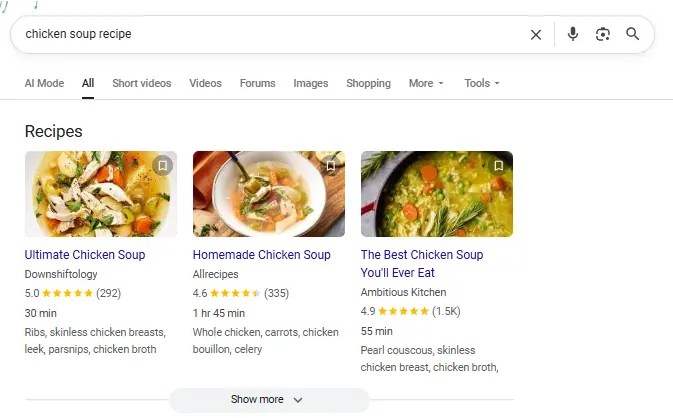
Here’s an example of the end result of some schema in action, showcasing added details for a recipe:
When you add schema to your HTML, it doesn’t change how your page looks to users, but it helps search engines interpret your content more accurately. That’s how you get things like star ratings, event dates, or FAQ dropdowns in SERPs.
Schema improves categorization by giving structure to information that would otherwise be unstructured or ambiguous. That extra clarity supports more precise indexing and increases your chances of appearing with rich results.
Most content online is considered unstructured data, which means it’s readable by humans but harder for machines to interpret. Schema adds structure that makes meaning explicit, bridging the gap between your content and how search engines understand it.
Types of Schema Markup
There are dozens of schema types, but only a handful consistently drive SEO value. The key is knowing which formats align with your goals and content structure. Here are the high-impact schema types you should focus on:
Commonly Used and SEO-Driven
Article: Use this for blog posts, news, or editorial content. It supports elements like headlines, bylines, and publication dates, helping your content stand out in organic results.
FAQ: Can make your page eligible for expandable Q&A boxes beneath your page title. A strong option for capturing more SERP space. FAQ schema works especially well on service or solution pages.
Product and Review: Must-haves for e-commerce. These display key details like price, availability, and customer ratings.
Local Business: Ideal for brick-and-mortar locations or service areas. It includes address, hours, contact info, and geo coordinates. Event: Showcases information for webinars, conferences, or in-person events like date, time, location, and ticket availability.
Breadcrumb: Enhances your site’s navigational trail in search results. It also helps search engines better understand your site’s structure.
Underutilized but High-Impact Schema Types
Video: Helps search engines surface and display videos with rich details like thumbnails, duration, and key moments.
Course: Designed for online education content. Includes fields for course name, description, provider, and learning outcomes.
Job Posting: If you’re listing open roles on your website, this schema can push them into Google Jobs with structured info like salary, qualifications, and deadlines.
Software Application: Highlights app features, pricing, platform compatibility, and reviews. Ideal for SaaS companies or digital products.
There are also industry-specific schema types for recipes, medical conditions, real estate listings, and more, each designed to help content stand out in competitive niches.
While most websites stick to just one or two schema types, combining them across relevant pages gives Google a clearer picture of your site and can increase eligibility for multiple rich result formats.
Why is Schema Markup Important For SEO?
Schema markup doesn’t directly impact rankings, but it can improve how your pages appear in search by making your content easier for search engines to understand. When used correctly, it clarifies the structure and intent behind your content, which improves how your pages appear in search results.
With SEO schema markup, your listings can include extra context like star ratings, pricing, or FAQs, making them more informative and more likely to be clicked when rich results appear. These enhanced listings improve visibility and help searchers understand your content before visiting your site, which supports better engagement and user satisfaction.
Structured data also improves the user experience by giving searchers helpful, structured details before they even land on your site. This kind of clarity reduces bounce rates and increases engagement, which are both positive behavioral signals.
To be clear, Google has stated that structured data is not a direct ranking factor. But it can improve how your content is understood and discovered in search.
“Structured data is not used for ranking purposes, but it can enable search result enhancements and content discovery.” — Google Search Central
If you’re not using schema markup yet, you’re likely leaving visibility and traffic on the table, especially in crowded search spaces.
Schema Markup And AI
As search shifts toward generative results, schema markup becomes increasingly valuable, not as a ranking signal, but as structured clarity that helps machines interpret content consistently at scale. Tools like Google’s AI overviews, ChatGPT, and other large language models increasingly reference or infer structured relationships in your content. While schema markup isn’t directly parsed by every AI tool, it provides a framework that reinforces meaning, credibility, and context.
In Google’s case, schema can increase the chances of being featured or cited in AI-generated summaries by making your content more machine-readable. Clear, structured data helps Google understand which parts of your content are most relevant to a query, and that’s exactly what fuels AI-powered result boxes.
It also supports consistency across platforms, ensuring that search engines, crawlers, and third-party tools are all interpreting your information the same way. That’s critical in a landscape where content can be surfaced in snippets, carousels, voice results, and generative interfaces.
As AI continues to reshape search behavior, structured data plays a critical role in making your content visible and machine-readable across evolving search experiences.
How to Create Schema Markup for SEO
There’s no single way to implement SEO schema markup. The right method depends on your setup, your tools, and how much control you want over the code.
Schema Markup Generators
Schema generators are great to help create your schema type so you don’t have to do it manually. They offer flexibility and control, especially if you want to create cleaner SEO schema markup using JSON-LD.
One great option is Dentsu’s Schema Markup Generator. It supports a wide range of schema types and gives you real-time previews of the structured data output.
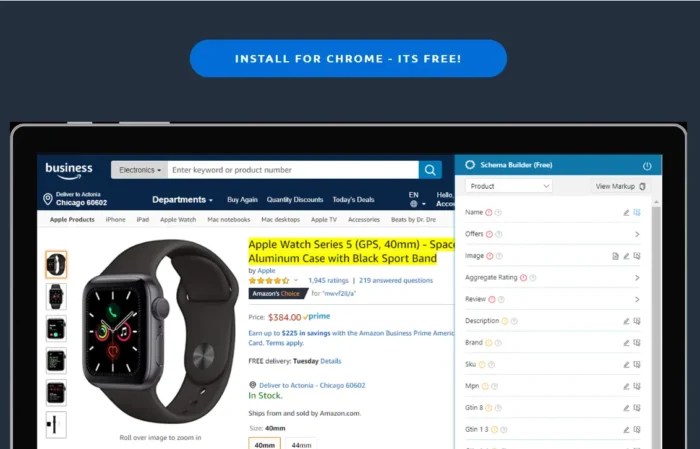
Another user-friendly pick is Schema.dev, which offers a visual editor for common schema types like Article, Product, Event, and more. It’s great for marketers who want more polish without touching raw code.
If you’re working on technical SEO at scale, tools like RankRanger’s generator or the Hall Analysis tool can help automate more advanced schema needs.
Most of these tools will output JSON-LD code, which you can copy and paste directly into your website’s head tag or through a CMS plugin.
Build Schema Manually
For developers or SEOs who want full control, manually writing SEO schema markup in JSON-LD is the most flexible option. This approach is ideal when you need to nest data types, customize beyond what’s available in generators, or integrate schema into a templated CMS or headless setup.
The most common format for manual schema is JSON-LD, a lightweight data format that can be placed inside a <script type=”application/ld+json”> tag in your HTML.
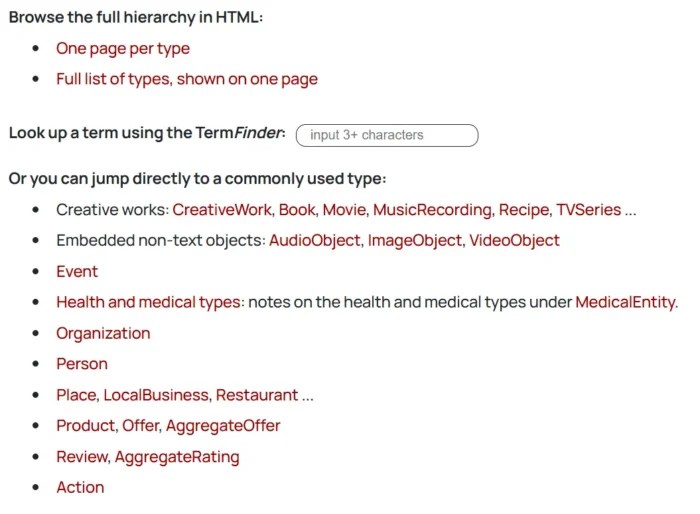
Schema.org provides documentation and examples for hundreds of item types, including complex combinations like a Product with reviews, availability, and brand info.
While this method takes more effort, it allows you to fine-tune every field and ensure the markup perfectly matches your content structure.
If you’re confident in your technical skills or already working with structured templates, hand-coding schema can unlock the most advanced use cases.
Use WordPress Plugins
If your site runs on WordPress, adding SEO schema markup is straightforward with the right plugin, with no coding required.
Yoast SEO adds basic structured data out of the box, like Article, WebPage, and Organization schema. You can also set defaults for different post types or override schema per page.
Rank Math offers more flexibility with its built-in Schema Generator. It supports custom fields, nested schema, and additional types like Product, FAQ, and Course. You can add schema site-wide or build it block-by-block using their visual editor.
Another option is the Schema & Structured Data for WP plugin, which offers advanced rule-based schema placement, support for over 30 types, and WooCommerce integration.
Most plugins handle the technical output for you, just select the schema type, fill out the fields, and publish.
Use ChatGPT
ChatGPT is a quick way to generate SEO schema markup without relying on a plugin or tool. It’s especially useful when you want structured data for a specific content type but don’t want to hand-code it from scratch.
To get started, just ask ChatGPT for the schema you need. For example:
“Create JSON-LD schema markup for a Product with name, price, rating, and availability.”
You can also refine the output by adding more context. Want to include an author bio? Just ask. Need multiple FAQs? List them out, and ChatGPT can format them for you.
The results are typically in valid JSON-LD format and can be copied into your site’s HTML or CMS.
It’s not a replacement for technical SEO tools, but it’s a powerful shortcut when used with the right prompts.
Add Schema Markup to Your Site
Once you’ve created your SEO schema markup, you need to place it on your site where search engines can find it. The most common format is JSON-LD, which should be embedded inside a <script type=”application/ld+json”> tag.
If you’re working directly with code, add the schema to the <head> section of your page, or just before the closing </body> tag. This helps ensure it gets picked up by search crawlers.
If you’re using a CMS like WordPress, Shopify, or Wix, many themes or SEO plugins include fields where you can paste your structured data directly. Just copy your JSON-LD and drop it into the appropriate field.
As we mentioned before, plugin-based setups, tools like Rank Math or Yoast will often insert schema automatically based on your settings, with no manual copy-paste needed.
No matter the method, the goal is the same: get valid, clean schema markup live on your site.
Validate Your Schema
Before you publish any SEO schema markup, you need to validate it. Even small formatting issues can break how search engines read your structured data.
You can either paste in your raw JSON-LD code or enter the URL of a published page. The tool will scan your markup and return any errors, warnings, or unsupported types.
Look for a “Valid” result nd ensure the schema type you used is recognized and correctly implemented. If there are issues, revise your code and re-test until everything passes.
You can also use Google’s Rich Results Test to see if your schema is eligible for enhanced SERP features.
Validation is a small step that ensures your markup actually works and gets you the visibility you’re aiming for.
Best Practices For SEO Schema Markup
To get the most out of your SEO schema markup, you need more than valid code. These best practices help ensure your structured data drives real visibility while staying within Google’s guidelines.
Only mark up visible, relevant content:
Don’t tag hidden elements, placeholder content, or anything users can’t actually see.
Schema should reflect what’s on the page. Misleading or hidden markup can get ignored or flagged.
Use the most specific schema type available:
Avoid generic markup. If your content is a recipe, use Recipe schema. If it’s a course, use Course schema. The more specific and accurate, the better.
Keep your structured data up to date:
Prices, dates, product availability, and other time-sensitive data should reflect the live content. Inaccurate schema can confuse search engines and users.
Avoid over-marking or spamming schema types:
Just because a schema exists doesn’t mean it belongs on your page. Only mark up what’s directly relevant and helpful to the user.
Accurate, helpful schema increases your chances of showing up in enhanced results. Misused or sloppy markup reduces trust and visibility.nd not content in hidden div’s or other hidden page elements.”
FAQs
What is schema markup?
Schema markup is a type of structured data that helps search engines understand the meaning of your content. It uses a shared vocabulary defined by schema.org to label key details like titles, authors, ratings, and more. When implemented correctly, it makes your content eligible for rich results, enhanced listings that display extra information directly in search.
What is schema markup SEO?
Schema markup SEO refers to the use of structured data as part of your overall search optimization strategy. While it doesn’t directly impact rankings, schema enhances how your pages appear in the SERPs. By making content easier to interpret and display, it supports better visibility, higher click-through rates, and alignment with user intent.
Does schema markup help SEO?
Yes, but not in the way most people expect. Schema doesn’t give you a direct ranking boost, but it improves how your pages are presented in search. Rich results stand out more, offer better context to users, and tend to earn more clicks. Schema can improve visibility and click-through rates, which can help your content attract more traffic over time.
Conclusion
Schema markup is one of those SEO techniques that helps to improve how your content appears in search results, yet it’s still underused. It helps search engines understand your pages more clearly, which leads to richer results, better visibility, and more clicks.
Whether you’re optimizing blog content, product listings, or service pages, structured data gives your site a clearer presence in search, and that matters in competitive markets.?