Posts

July 2025 Digital Marketing Roundup: What Changed and What You Should Do About It

Another month, another avalanche of platform updates and game-changing industry developments. 

Not all the updates will move the needle for your business, but some absolutely will. That’s why I cut through the noise to bring you the changes that actually matter for marketers and agencies.

These 20 trends from July 2025 are reshaping how we think about visibility, attribution, and growth. Let’s take a closer look.

Key Takeaways

  • Search is evolving fast: AI citations favor high-traffic sites, while Google adds audio responses and Instagram posts show up in search results.
  • Attribution is getting better: Meta restores advanced mobile tracking, while Apple now indexes screenshot text for app store optimization (ASO).
  • Automation is winning: Manual campaigns are dying as platforms push AI-driven optimization.
  • Trust drives B2B: LinkedIn data shows 94 percent of marketers rank trust as the top driver of brand success.
  • Video dominates everywhere: From Instagram Trial Reels to connected TV partnerships, video content rules.
  • Download the full roundup report for July 2025 at the NP Digital website.

Search and AI Evolution

The search world is transforming faster than most marketers can keep up. Here’s what’s changing and why it matters.

High-Traffic Sites Get More AI Citations

What happened: Ahrefs analyzed mention share versus website traffic and found something crucial. Higher-traffic websites get cited more frequently in AI-generated responses. This creates a powerful feedback loop where traffic attracts more traffic through AI mentions.

Ahrefs' Brand Radar.

Why it matters: We’re seeing the birth of a new authority signal. AI platforms like ChatGPT, Perplexity, and Gemini are moving beyond content quality, favoring sources that already get traffic and engagement. If you’re not driving consistent traffic, you’re essentially invisible to AI systems that millions of people use daily.

What to do:

  • Prioritize strategies that grow traffic holistically across all channels.
  • Track brand mentions in AI platforms as a new key performance indicator (KPI) alongside traditional search rankings.
  • Repurpose your highest-traffic content across multiple formats and platforms.
  • Build out topic clusters around your most successful content themes.

Google Adds Audio Search Responses

What happened: Google launched “Audio Overviews”—AI-generated spoken responses that sound like podcast conversations between two voices. One explains the topic, while the other asks clarifying questions, making complex information more digestible.

Google's Audio Overviews.

Why it matters: Don’t confuse this with text-to-speech. It’s a fundamental shift toward conversational search experiences. Users can now get rich, contextual answers without reading a single word. For content creators, this means your content needs to work in multiple formats.

What to do:

  • Write with conversation in mind, using natural language and clear explanations.
  • Structure content with clear Q&A sections that can be easily extracted.
  • Optimize for featured snippets, as these often feed AI Overview systems.
  • Test how your key topics sound when read aloud, and adjust accordingly.

Instagram Posts Show Up in Google Search

What happened: Starting July 10, Instagram began allowing search engines to index public content from professional accounts. Your Instagram posts can now appear in Google search results, extending reach beyond Instagram’s internal algorithm.

Why it matters: Social media keeps developing as an SEO channel. This bridges the gap between social engagement and search visibility, giving brands a new way to rank for competitive keywords through social content.

What to do:

  • Audit your Instagram content strategy with SEO in mind.
  • Use keyword-rich captions that would make sense in search results.
  • Create carousel posts that provide substantial value and context.
  • Consider Instagram posts as part of your broader content distribution strategy.

Google’s Search Updates Continues

What happened: Google initiated its second core update of 2025 in June, with effects still rolling out. Early data suggests this update coincides with changes to Google’s Gemini AI models, affecting both traditional rankings and AI Overview visibility.

Why it matters: Core updates assess long-term content quality, and this one seems particularly focused on how content performs in AI-driven features. Sites optimized only for traditional search may see fluctuations.

What to do:

  • Monitor your AI Overview visibility alongside traditional rankings.
  • Focus on E-E-A-T principles: experience, expertise, authoritativeness, and trustworthiness.
  • Avoid making reactive changes to short-term ranking fluctuations.
  • Double down on creating genuinely helpful, user-centric content.

Link Building Gets Smarter in 2025

What happened: Search Engine Land outlined 12 critical link-building best practices for 2025, emphasizing that volume-based backlink strategies are deadweight. The new approach focuses on quality over quantity, contextual relevance, and unlinked brand mentions over raw domain authority.

Why it matters
: Link building used to be a numbers game. Now it’s about authority and authenticity. With AI search gaining popularity, the focus has shifted from “who links to you” to “why they link to you” and whether those links enhance your reputation across multiple discovery platforms.

What to do:

  • Shift from volume-based outreach to relationship-driven link building.
  • Focus on unlinked mention outreach to convert brand citations into backlinks.
  • Build editorial partnerships with industry-aligned publications and thought leaders.
  • Create content that naturally earns links through genuine value and shareability.
  • Treat link building as an ongoing authority-building strategy, not a one-time project.

Paid Advertising Evolution

Advertising is getting more sophisticated, with better attribution and expanded inventory. Here’s what’s changing.

Amazon and Roku Transform Connected TV

What happened: Amazon DSP now integrates Roku’s connected TV inventory, giving advertisers access to approximately 80 million U.S. households, over 80 percent of the connected TV (CTV) market. Early tests show a 40 percent increase in unique viewer reach and a 30 percent reduction in ad repetition.

Why it matters
: This partnership creates the largest CTV advertising platform in the U.S., combining Amazon’s rich consumer data with Roku’s massive reach. For the first time, brands can use actual shopping behavior to target audiences across major streaming platforms.

What to do:

  • Evaluate your current CTV strategy and consider expanding into this unified platform.
  • Use Amazon’s shopping signals to create more precise audience segments.
  • Develop creative specifically for the combined Prime Video and Roku audience.
  • Track unique reach metrics to optimize for audience expansion and not just frequency.

Meta Restores Advanced Mobile Measurement

What happened: Meta re-enabled Advanced Mobile Measurement (AMM), allowing opted-in advertisers to access device-level attribution data. Starting July 21, Meta’s “Engaged Views” count like clicks in attribution models, aligning with other advertising platforms.

Why it matters: Mobile marketers finally have the granular data they’ve been missing. With device-level attribution and better understanding of user journeys, campaign optimization becomes significantly more precise.

What to do:

  • Opt into Meta’s AMM by accepting the terms (requires admin access).
  • Integrate with your mobile measurement partner (MMP) for unified reporting.
  • Start optimizing for Engaged Views as meaningful conversion signals.
  • Use device-level data to identify highest-value user segments.

Meta Phases Out Manual Campaigns

What happened: Meta is rebranding Advantage+ Shopping to Advantage+ Sales, consolidating sales, app, and lead campaigns into one automated format. Manual campaign setup is being phased out, though some targeting controls remain.

Why it matters: This signals Meta’s complete shift toward AI-driven advertising. Manual bid management and granular targeting controls are becoming obsolete as they’re replaced by machine learning optimization.

What to do:

  • Transition existing manual campaigns to the Advantage+ format.
  • Focus optimization efforts on creative quality and audience signals rather than manual controls.
  • Use broad targeting to unlock the full benefits of Meta’s AI.
  • Monitor performance closely during the transition and adjust creative accordingly.

Amazon Prime Day Doubles Down

What happened: Prime Day 2025 extended to four days (July 8-11), doubling its usual length. New deals dropped every five minutes, giving brands more time to optimize but potentially diluting urgency.

Why it matters: If Amazon sticks with this four-day model, the extended window allows for real-time campaign optimization and better inventory management, but brands need to maintain momentum across four days instead of creating a two-day sprint.

What to do:

  • Implement hourly performance reviews and budget reallocation.
  • Prepare multiple creative assets to refresh messaging throughout the event.
  • Set different KPIs for each day to maintain focus and urgency.
  • Use the extended timeframe for better attribution analysis.

Social Media and Content Strategy

Social platforms are evolving into search engines, discovery platforms, and attribution tools rolled into one. Here’s how to adapt.

Sephora Succeeds With Experiential Marketing

What happened: Sephora launched its “Delivered to Beauty” campaign, offering $20 Lyft credits to bring customers to select stores during July 7-10. The initiative included in-store activations like giveaways and makeup demos, blending digital engagement with physical experiences.

An example of Sephora's Delivered to Beauty campaign.

Why it matters: This shows how experiential marketing can bridge online buzz and in-store traffic. Strategic brand partnerships can unlock new audiences and create unexpected touchpoints in the customer journey, but only when supported by solid digital infrastructure.

What to do:

  • Plan experiential campaigns with digital amplification in mind from day one.
  • Create optimized landing pages and campaign-aligned content for every activation.
  • Use local SEO tactics to capture search traffic during events.
  • Measure both foot traffic and digital engagement to calculate true ROI.

Instagram Trial Reels Show Results

What happened: Instagram’s Trial Reels feature lets creators test content with non-followers before posting to their main feed. Data shows 40 percent of creators using Trial Reels post more frequently, with 80 percent seeing increased reach among non-followers.

Examples of Instagram Reels.

Why it matters: This is like A/B testing but for social algorithms. Instead of guessing what will perform, creators can get real feedback from fresh audiences within 24 hours.

What to do:

  • Use up to 20 Trial Reels daily to test different content formats and topics.
  • Track engagement patterns to identify what drives reach beyond your existing audience.
  • Convert successful trials into regular posts and build content calendars around proven winners.
  • Include Trial Reel performance in your social media reporting.

Pinterest Boosts Visual Search

What happened: Pinterest released new guidance for brands to align their content with AI-powered visual search trends. Key recommendations include updated catalogs, lifestyle imagery, and Performance+ targeting for broader reach.
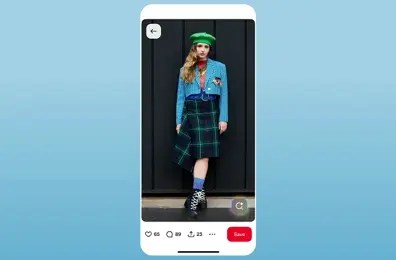
An example of Pinterest Visual Search.

Why it matters: With 570 million monthly active users, Pinterest remains an underutilized search channel for many brands. These updates make it easier to appear in visual searches without manual keyword optimization.

What to do:

  • Audit existing Pinterest catalogs for accuracy and completeness.
  • Test lifestyle imagery alongside product shots to increase discovery.
  • Enable Performance+ targeting to expand reach beyond manual audience selection.
  • Treat Pinterest as part of your omnichannel search strategy (not just social media).

LinkedIn Emphasizes Business Influencers

What happened: LinkedIn released a 22-page guide highlighting the power of B2B creators and influencer partnerships. It shows that B2B buyers actively seek out creator content as trusted resources throughout their purchasing journey.

Why it matters: B2B influence goes beyond follower counts to credibility and industry expertise. Decision-makers trust individual voices more than brand messaging in complex B2B purchases.

What to do:

  • Identify industry-specific creators who resonate with your target audience.
  • Focus on value-driven content that addresses real buyer needs and challenges.
  • Use video and thought leadership formats to amplify reach and engagement.
  • Measure influence through pipeline impact, not just engagement metrics.

Platforms and Technical Updates

Behind-the-scenes changes are set to affect how your content gets discovered and measured.

Apple Indexes Screenshot Copy

What happened: Apple now uses visible text in App Store screenshot captions as searchable metadata. This means your visual assets directly impact search rankings and app discovery.

Examples of visible text in App Store screenshot captions.

Why it matters: Screenshot captions were previously just conversion tools. Now, they’re discovery tools. Apps can rank for keywords included in their visual content, expanding ASO beyond traditional metadata fields.

What to do:

  • Add relevant keywords to screenshot captions while maintaining conversion focus.
  • Avoid duplicating keywords across metadata fields, but strategically repeat key terms.
  • Use captions to reinforce core product benefits and use cases.
  • Track keyword performance changes after implementing caption optimization.

Cloudflare Blocks AI Crawlers by Default

What happened: New Cloudflare users (representing about 20 percent of the internet) must now explicitly opt in to allow AI crawlers to access their websites for content scraping and model training.

Why it matters: Millions of websites could be excluded from AI search results and language model training unless they take action. This creates a potential visibility gap for brands that don’t adjust their settings.

What to do:

  • Review your Cloudflare settings and enable AI crawler access if you want AI visibility.
  • Consider the trade-offs between content protection and AI platform inclusion.
  • Monitor AI citation tracking (like Ubersuggest’s upcoming feature) to measure impact.
  • Treat this like submitting sitemaps to search engines. You’re telling AI platforms what to crawl.

B2B and Trust Building

B2B marketing is shifting toward relationship-building and credibility over pure lead generation.

LinkedIn Data: Trust Drives B2B Success

What happened: LinkedIn’s latest research shows 93.7 percent of B2B marketers say trust is the top factor for brand success. Customer recommendations outrank product features as purchase drivers.

B2B research from LinkedIn.
A close-up of a survey

AI-generated content may be incorrect.

Why it matters: With AI-generated content and automated outreach rising in popularity, authentic human validation becomes the ultimate differentiator. Trust has gone from a “nice to have” to a competitive necessity.

What to do:

  • Prioritize collecting and amplifying authentic customer testimonials.
  • Integrate social proof into every stage of your content funnel.
  • Use customer success stories in sales presentations vs. just in marketing materials.
  • Evaluate your brand messaging to ensure it conveys credibility at every touchpoint.

Ubersuggest Gets AI Search Optimization

What happened: Ubersuggest is rolling out AI Search Optimization reporting in beta, tracking brand mentions and citations across ChatGPT, Perplexity, Gemini, and other AI platforms. The tool monitors visibility, sentiment, and competitive positioning in AI-generated responses.

Why it matters: This addresses a massive blind spot for marketers. You can optimize for Google rankings all day, but if you’re invisible in AI platforms handling billions of queries, you’re missing huge opportunities. This is the first major tool to treat AI visibility as a measurable, trackable metric.

What to do:

  • Audit your current brand mentions across AI platforms manually until the tool launches.
  • Start optimizing content for AI Overview inclusion using structured data and clear answers.
  • Track competitors’ AI citations to identify content gaps and opportunities.

Looking Ahead: What This Means for Marketers

These updates share a common thread: The marketing world is becoming more sophisticated, more automated, and more focused on authentic value.

  • The search-everywhere reality is here. Your content needs to perform across Google, Instagram, AI platforms, and voice interfaces. SEO now means search everywhere optimization.
  • Attribution is getting better, but complexity is increasing. With Meta’s restored mobile measurement and Apple’s expanded ASO signals, you have more data, but you need better systems to make sense of it.
  • AI is becoming the default. From Meta’s automated campaigns to Google’s audio responses, machine learning is handling more of the heavy lifting. Your job is shifting from manual optimization to strategic input.
  • Trust and relationships matter more than ever. With automated content and AI-generated responses on the rise, human credibility becomes the ultimate competitive advantage.

The brands that win in this environment won’t be the ones with the biggest budgets or the most sophisticated tools. They’ll be the ones that adapt quickly, test constantly, and focus on creating genuine value across every platform that matters. 

Ready to put these insights to work? Let’s talk about how we can help you navigate these changes.

Read more at Read More

5 LLM Visibility Tools to Track Your Brand in AI Search (2025)

LLMs like ChatGPT and Gemini are quickly becoming the first place people turn when researching brands, products, and services.

But most companies have no idea how they’re actually showing up.

That’s a huge blind spot — especially as AI-generated answers start shaping what people believe about your brand before they ever hit your site.

At Backlinko, we’ve already seen the shift.

Hundreds of thousands of visitors per month still come from organic search…

Domain Overview – Backlinko – Organic Traffic

But LLM-driven traffic is up 800% year-over-year. And accelerating.

Backlinko LLM Traffic

That’s why tracking your visibility in AI search matters. Because it’s not just about traffic anymore — it’s about presence, perception, and positioning.

So: what tools can actually help you do that?

I’ve tested more than a dozen. These are the five that stand out. The ones I trust right now for speed, scale, and signal.

Some are scrappy startups. Others are built for enterprise.

But every tool on this list does one thing well:

They help you see how your brand shows up in ChatGPT, Gemini, Perplexity, Claude, and more.

Let’s break them down.

What to Look For in an LLM Tracking Tool

A lot of LLM tracking tools look impressive at first glance.

But once you dig in, many fall short — either because they’re built on a shaky foundation, limited scraping technology, or generic dashboards that miss what actually matters.

Here’s what to consider:

  • Real scale: Thousands of prompts. From the UI, not just the APIs. Otherwise, you miss key results (like tables and maps).
  • Multi-engine coverage: ChatGPT is table stakes. Top tools also track Google AI Mode, AI Overviews, Perplexity, Claude, and Copilot.
  • Actionable insights: Breakdowns by model, topic, sentiment. Bonus if it flags missed opportunities and quick wins.
  • Roadmap momentum: Is the team shipping fast? If not, skip it.
  • Global support: Need multi-language prompts or market-level insights? Not all tools can do it.
  • Enterprise-ready: Solid support. Clean data policies. And a team that’s leading the space, not chasing it.

1. Semrush AIO

Semrush AIO isn’t like the other tools on this list.

Semrush AIO – Backlinko – AIO Overview

Yes, it’s on the more expensive side.

But I also think it’s the most complete product on the market right now for tracking your brand across LLMs.

Why?

Because Semrush has something most others don’t: infrastructure and scale.

They’ve spent over a decade building one of the most robust search visibility platforms, and now they’re applying that to AI.

My favorite feature is the Competitor Rankings and Market Analysis. Once you have your prompts, and categories, dialed in, you can really get a detailed look at your visibility across all (or each individual) LLM that you track.

Semrush AIO – Backlinko – Competitor Rankings

And then you can really start honing your strategy by focusing on the top-performing Source Domains and specific URLs.

Semrush AIO – Backlinko – Source Analysis

Plans & Pricing

Enterprise pricing upon request. Request a demo here.

Semrush AI SEO Toolkit starts at $99/month per domain. It gives you a solid snapshot of how your brand shows up in AI responses — great for just getting started.

LLMs Covered

ChatGPT, Google AI Overviews, Gemini, Claude, Grok, Perplexity, Deepseek

Key Capabilities

  • Real-time brand, product, and concept tracking
  • Quote-level visibility and sentiment scoring
  • Share of Voice metrics across platforms
  • Platform-by-platform performance insights
  • Workflow automation and optimization guidance
  • Deep integrations with Semrush’s core platform for multi-channel visibility

2. Profound

Profound is one of the more interesting new companies in the space right now.

Profound – Semrush – Platforms

They launched in 2024 and in June 2025 raised a $20M seed round to go all-in on AI search.

The product looks great. It feels fast. And they’re shipping like crazy.

Prompt-level insights, platform-by-platform visibility, real crawl logs. There’s a lot to like.

Profound – Prompt Analysis

But one thing to watch: Profound is still new.

They don’t have the infrastructure or track record of the bigger players (yet).

So while the pace of innovation is impressive, the long-term durability is something to keep in mind.

Plans & Pricing

Starts at $499/month for 200 prompts. Enterprise plans available.

LLMs Covered

Lite plan includes: ChatGPT, Perplexity, Google AI Overviews, Microsoft Copilot. Enterprise plan includes Google AI Mode. And more on the horizon.

Key Capabilities

  • Prompt-level tracking + AI-generated prompt suggestions
  • Visibility and Share of Voice by topic, region, and platform
  • Citation analysis with URLs, domains, and page-level stats
  • Real-time LLM crawl and citation logs
  • Conversation Explorer with topic-level ChatGPT demand
  • “Actions” workspace for optimizing slugs, content, and targeting

3. ZipTie.Dev

ZipTie is one of the simplest tools on this list, and that’s exactly why it works.

ZipTie – Petlibro – Overview

There’s no bloat, no complex setup, and no sales process. You just plug in your brand and get visibility across ChatGPT, Perplexity, and Google’s AI Overviews.

It’s not built for teams that want deep prompt logic or workflow integrations.

ZipTie – Petlibro – Queries

But if you want fast answers, clean dashboards, and a dead-simple way to check how your brand is showing up in AI search, ZipTie gets the job done.

Great for early-stage teams or solo operators who want signal without complexity.

Plans & Pricing

Starts at $99/month (Basic plan with 400 AI search checks)

LLMs Covered

ChatGPT, Perplexity, Google AI Overviews

Key Capabilities

  • Tracks brand presence across top AI search engines
  • Provides visibility and citation data in one view
  • Includes prompt-based monitoring with simple tagging
  • Export-friendly dashboard and fast onboarding
  • Basic UI with just the essentials

4. Peec AI

Peec AI is one of the newest players in the LLM tracking space, founded in 2025 and backed by a €5.2M seed round.

Peec AI – Underfit – Dashboard

The platform is built to monitor brand visibility and sentiment across major AI search engines while keeping the interface simple and focused.

You can track your active prompts:

Peec AI – Underfit – Prompts

And the top performing sources, to guide your strategy:

Peec AI – Underfit – Sources

Plans & Pricing

  • Starter: $89/month (25 prompts, 3-country coverage)
  • Pro: $199/month(100 prompts, 5 countries)
  • Enterprise: $499+/month (300+ prompts, 10+ countries)
  • Add‑ons
    • GPT‑4 Search: $19–$49
    • Claude 4: $29–$159
    • Gemini Search Preview: $99–$499

LLMs Covered

Included: ChatGPT, Perplexity, Google AI Overviews

Optional Add-ons: Claude 4, Gemini, GPT-4 (via SearchGPT plugin)

Key Capabilities

  • Tracks brand mentions, sentiment, and visibility across top LLMs
  • Clean, modern UI with prompt-level reporting and tagging
  • Country-specific visibility insights (multi-language capable)
  • Easy onboarding and export-friendly reports
  • Modular pricing for expanding LLM coverage without overpaying

5. Gumshoe.AI

Gumshoe AI is in public beta — no clear pricing or enterprise polish yet.

Gumshoe – Backlinko – Report

But its approach? I’m super interested.

Unlike tools that start with prompts, Gumshoe starts with personas.

You define your audience — their roles, goals, and pain points — and Gumshoe reverse-engineers the kinds of prompts they’re likely to ask across AI chat tools.

The project setup flow is what really stands out.

You start by verifying your brand positioning. Then you choose one analysis focus area — usually your clearest product or service.

From there, Gumshoe builds a list of rich, realistic target personas. Not fluffy archetypes like “SaaS Sally” or “Paul the Plumber” — actual roles with meaningful intent.

Gumshoe – Personas

Then it generates detailed, relevant prompts based on those personas and associated topic clusters.

This is (early-stage) structured AI search research, tied directly to how your audience thinks and searches.

Gumshoe – Brand Reach

Plans & Pricing

None announced yet.

LLMs Covered

Perplexity AI Sonar, Google Gemini 2.5 Flash, OpenAI 4o Mini, Anthropic Claude 3.5

Key Capabilities

  • Persona-based prompt generation and tracking
  • Visibility scoring by persona, topic, and LLM
  • Citation source tracking across answers
  • Topic visibility matrix for how your brand is mentioned by each persona for a given topic

Whichever Tool You Choose, Just Start Tracking

Whether you’re measuring it or not, users are discovering your competitors through AI interactions. So, it’s a good idea to have your finger on the pulse.

To get started, pick one tool, add 3-5 competitors, and track 10+ prompts about your products/services for 30 days. You’ll start seeing where you have opportunities.

Don’t expect overnight changes. This is like early-stage SEO — you’re building a foundation for long-term authority.

Once you have the data, what do you do next? Take a look at our guide on Generative Engine Optimization. We show you how to influence how LLMs mention and cite your brand.

The post 5 LLM Visibility Tools to Track Your Brand in AI Search (2025) appeared first on Backlinko.

Read more at Read More

Reddit SEO Guide to Increasing Brand Visibility in Google in 2025

Have you noticed Reddit showing up more and more in search results lately?

You’re not imagining it.

Reddit has quietly become a major player in Google’s search ecosystem and will only grow. As of 2024, Google rolled out multiple search engine results page (SERP) features prioritizing Reddit content, including “Discussions and forums” and “What people are saying” panels. 

Plus, Reddit struck a licensing deal with Google to train AI models using its content. That means Reddit insights are now baked into how Google’s AI Overviews are shaped.

So, what does that mean for you?

It means your SEO strategy needs to account for Reddit. Whether you’re trying to show up on Reddit or rank because of Reddit, this platform can unlock a surprising amount of visibility. If you know how to work it, that is.

In this guide, we’ll break down how to use Reddit SEO to connect with real users and earn space in today’s evolving SERPs.

Key Takeaways 

  • Reddit threads increasingly appear in Google features like “Discussions and forums” and AI Overviews, making Reddit a key player in search visibility.
  • Strategic participation in relevant subreddits can boost brand authority, uncover content gaps, and influence what ranks for your target keywords.
  • SERP analysis helps identify high-ranking threads to engage with, or keyword opportunities where new threads have a chance of appearing.
  • A phased strategy (Crawl → Walk → Run) helps brands build trust before scaling Reddit engagement across profiles and subreddits.
  • NP Digital achieved real-world results for TurboTax, proving that Reddit SEO can drive SERP wins when paired with link building and blog optimization.

What Is Reddit SEO?

Reddit SEO refers to optimizing for two interconnected opportunities:

  • On-platform SEO: How your content appears and performs within Reddit’s search and subreddit ecosystems.
  • Off-platform SEO: How Reddit content ranks and contributes to visibility in Google’s SERPs, especially in features like “Discussions and forums,” “What people are saying,” and even traditional organic listings.

Reddit itself functions like a mini search engine. Users search subreddits for recommendations, reviews, and answers to specific problems. Search engine optimization for Reddit posts, comments, and titles using relevant keywords (without sounding spammy) helps them show up in internal search results and gain more upvotes, which helps with visibility.

But that’s just one side of it.

The bigger opportunity right now is off-platform SEO. Google is increasingly pulling Reddit content into its results because of its authenticity and community-driven value. Threads with genuine discussions or useful information often rank alongside blog posts and product pages, especially when the query is intent-driven or phrased like a question.

Ultimately, Reddit SEO is less about manipulating the algorithm and more about participating in conversations that matter, adding real value, and positioning your content so both Reddit users and search engines can find it.

A search for "Best Tax Software Reddit."
Reddit search results for "Crypto Tax Tips."

Why Reddit Is More Important Than Ever for Digital Marketing

As an online forum, Reddit mirrors how real people research, evaluate, and decide. That’s why it matters so much for digital marketers in 2025. It gives us something that’s becoming harder to find in traditional SEO: authentic intent signals.

People aren’t searching on Reddit for fluff. They’re looking for real experiences, firsthand reviews, product feedback, or deep-dive discussions. And that kind of raw, unfiltered demand is gold for modern content and SEO teams.

But Reddit also feeds the broader shift we’re seeing in how search works. We’re no longer optimizing for one destination (Google). We’re optimizing for a network of discovery channels, including Reddit. This plays into an important concept known as search everywhere optimization: getting found in the places where people ask questions and search for answers they can trust.

Ignore Reddit SEO, and you overlook where real buying conversations happen. Embrace it, and you tap into a platform that builds trust, informs content creation, and amplifies search visibility—without the traditional gatekeepers.

Reddit visibility in the "Discussions and forums" tab in Google.

What Makes Reddit and SEO a Unique Combo

Reddit and SEO work together, but not in the way most marketers are used to. In short, Reddit rewards what Google is increasingly prioritizing: helpful, experience-driven content.

Unlike platforms built for brands and publishers, Reddit is built for communities. That means the usual SEO tactics (link building or keyword integration) fall flat here. In fact, they’ll probably backfire. Reddit’s user base is naturally skeptical and vocal about anything that feels inauthentic.

But that’s exactly what makes it powerful.

When done right, Reddit SEO isn’t about broadcasting or promotion; it’s about earning trust. Threads that genuinely answer questions or share insights have a much higher chance of engagement within Reddit, and even get featured in Google search results.

A Reddit post example.

Reddit also functions as a real-time SEO feedback loop. What users upvote (or ignore) can help you validate keyword intent, content angles, and topic resonance before investing in a full-blown content campaign. 

How to Use Reddit for SEO

We’ve discussed how using Reddit for SEO strategy can boost your visibility and improve your rankings. But how, exactly?

Below are the core Reddit SEO tips you can use to get the most out of the platform:

Brand Visibility in Google SERPs

Since Reddit threads and comments increasingly appear in organic search results and SERP features, your Reddit content can rank in Google, even if your site doesn’t.

Whether you’re answering questions or sharing original insights, helpful content on Reddit can land in top positions for highly specific, intent-driven keywords.

Target your Reddit content to answer question-based phrases and long-tail keywords. These tend to trigger SERP features that pull in Reddit threads. Using the pre-populated options in the Google search bar or a platform like AnswerThePublic.com is a great way to research and uncover these types of search terms. 

Appear in AI-Generated Search Results

Thanks to Reddit’s licensing deal with Google, Google’s AI Overviews (and other LLM-powered results) are being trained on Reddit data. As generative search becomes more mainstream, the odds of your Reddit content being cited in these answers increase. Focusing on creating content that’s genuinely useful, experience-based, and conversational gives you a better chance of being surfaced, especially for product queries, comparisons, or niche how-tos.

Build Topical Authority and Trust

Reddit allows you to engage with users in a way that builds brand trust and positions you as an expert. The best way to leverage this direct contact with your audience is to participate consistently and establish credibility. Whether you’re answering a technical question or offering a thoughtful opinion, you’ll build a solid digital footprint over time that both Google and your audience recognize.

It’s also a great hedge against negative chatter. Owning your narrative through proactive engagement can reduce reputational risk and save you from frustrating hurdles or shadow banning.

Get Customer and Content Insights

Think of Reddit as a real-time content lab. It’s where users ask questions that don’t always appear in keyword tools—yet. Search relevant subreddits for your industry and see what your audience is talking about. You’ll start to uncover content gaps like audience pain points and phrasing you may have overlooked.

Fuel Keyword Research and Topic Ideation

Reddit is a keyword opportunity goldmine, especially long-tail, low-competition keyword ideas that may not even register in traditional tools until the trend explodes. When you’re browsing subreddits, look for:

  • Questions with multiple upvotes or engagement
  • Recurring themes or product mentions
  • Specific phrasing that reflects how your audience thinks (not how marketers write)

This intel is especially helpful when building keyword or topic clusters or aiming to dominate topical authority around a niche subject. Couple this Reddit SEO strategy with our SERP Analysis Guide to supercharge your overall SEO performance. 

You can also validate ideas by seeing what gets traction (and what doesn’t) before investing in full-scale production. Tools like Ubersuggest, Google Trends, AnswerThePublic, and Reddit’s own search bar can help spot growing or redundant trends and help inform your content topics and strategy. 

Building Your Reddit SEO Strategy

Successfully using Reddit for SEO doesn’t happen overnight. It’s a long game that requires consistency and a plan that evolves with your investment level. That’s why we recommend thinking of your Reddit SEO strategy in phases.

The best approach is to start small and learn the landscape. Get familiar with the structure of communities and how users behave in them. Once you get the hang of it and develop an eye for what works, you can scale your efforts over time.

We call this strategy “Crawl → Walk → Run.” Each phase builds on the last. The goal is to move from passive listening to full-scale community engagement, ending in a lasting, high-visibility Reddit presence.

Crawl

Reddit isn’t the place for hard sells. Coming in too strong can backfire fast, which is why the Crawl phase is all about listening first. It’s where observation and subtle engagement take center stage.

Start by identifying subreddits where your audience hangs out. Pay attention to tone, post formats, and what kinds of answers get upvoted. Use a few branded profiles to upvote and comment occasionally to build familiarity without promoting anything.

You’ll also want to analyze SERPs. Use tools like Ubersuggest or a simple “site:reddit.com” Google search to find Reddit threads ranking for your target keywords. Engaging in these threads boosts visibility both on Reddit and in search. You can also pull information from Google’s “Discussions and forums” and “What people are saying” features. 

A Reddit site search for tax preparation.
Reddit Discussions and Forums results in Google with "What happens if you file taxes late."

At this stage, your goal isn’t to go viral. It’s to learn the landscape and get your brand’s foot in the door.

Walk

In the Walk phase, you begin starting threads and offering expert commentary. Focus on subreddits where your audience is most engaged. Share genuine insights and respond to user pain points. This develops a foundation for content pillars around topics that align with your brand but still feel native to Reddit.

Using SERP analysis proactively also helps at this stage. Look for target keywords and SERPs where Reddit threads currently rank. If a competitor’s blog shows up and Reddit is pulled into SERP features, that’s your chance to start a new thread and own that discussion. Aim for question-based titles and intent-matching content. If no Reddit threads currently rank in the SERP, there’s less of a chance for ranking on Reddit for that search since Google doesn’t find Reddit valuable for said search.

You’ll need more profiles and daily management here. But the goal remains the same: Build trust and start shaping the narrative in spaces your audience already values to improve your brand visibility.

Run

In the Run phase, you’re starting to lead conversations within the Reddit forums. That means launching your own branded subreddit. You’ll be investing time responding in real time across high-priority threads and maintaining visibility in multiple subreddits tied to your niche.

At this level, Reddit becomes a content and community engine. You’re scaling engagement, managing 10 to 40 (or more) branded profiles, and integrating SEO, content, and customer service teams to create a unified presence.

You’re also building authority that flows off Reddit. High-quality threads are more likely to provide SEO results through backlinks and appearances in Google features, like AI Overviews and “What people are saying.”

Google results for Quarterly tax deadlines.

Converting these positive signals to traffic from Reddit SEO requires consistency and credibility. By owning the space, you position your brand as a go-to source, both for search engines and the community itself.

The Impact of Reddit SEO: A Case Study

Recently, NP Digital ran a Reddit campaign for TurboTax. Their case study is a strong example of what the Crawl phase can achieve when executed with intention and paired with SEO.

From January to April 2025, TurboTax-branded Reddit profiles engaged in relevant subreddits, contributing 159 comments and launching strategic threads. A few appeared in Google’s “What people are saying” feature for the keywords “quarterly tax deadlines” and “turbotax early refund.” Another comment was cited in AI-generated Reddit answers within days of posting.

Reddit mentions hit 5,404 (an increase of 10 percent year over year (YoY)), and while sentiment was still mixed (59 percent negative; 6 percent positive), positive mentions increased 2 percent  YoY, even amid brand-sensitive issues like early refunds and pricing.

The team also saw success combining Reddit engagement with targeted SEO tactics. A refreshed blog post, Ways to File for Free, secured the featured snippet for “is Turbotax free” (14,800 monthly search volume (MSV)) within weeks, helping to outrank negative Reddit content.

The takeaway is that Reddit SEO drives real results. When done right, it drives visibility in SERPs and gives brands more control over their search narrative.

FAQs

How to use Reddit for SEO?

Reddit can support your SEO strategy in a few powerful ways. First, Reddit threads often appear in Google’s SERPs, especially in features like “Discussions and forums.” By starting or contributing to high-value threads, your content can gain direct visibility in search results. Second, Reddit helps with content discovery. You can analyze subreddits to find trending topics, language patterns, and user intent that can inform your broader SEO and content strategies.

You can also use SERP analysis to find keyword gaps where Reddit threads are being pulled into SERP features and create new threads to increase visibility in those spaces. Just remember: Value and authenticity win. Spam won’t get you anywhere.

Is Reddit a search engine?

Not in the traditional sense, but it functions like one.

Reddit has a robust internal search engine that allows users to find content across thousands of subreddits. People use it to get advice, vet products, read reviews, and solve problems phrased as long-tail queries that mirror Google searches. In fact, younger audiences usually search Reddit directly for information instead of using Google.

While Reddit doesn’t index the open web, it absolutely influences the way people search and make decisions. That’s why optimizing for Reddit search and contributing to high-performing threads can give you a dual benefit: Visibility within Reddit and in Google SERPs.

Does Reddit help with SEO?

Yes, Reddit can be a powerful SEO enhancer when you use it strategically.

High-value Reddit threads often rank in Google’s organic results and featured SERP modules. Creating or contributing to those threads increases your chances of gaining real estate in search results, even for competitive terms. Reddit is also a great place to uncover keyword and content opportunities before they trend.

It doesn’t directly boost domain authority like backlinks might, but it shapes user perception, generates traffic, and helps Google associate your brand with helpful, trustworthy content. As Google’s AI-driven search continues to evolve, Reddit’s role in shaping what gets surfaced will likely grow.

Conclusion

Reddit SEO gives you something traditional channels can’t: direct access to how people think, search, and talk in real time.

It’s a space where trust matters more than tactics. And that’s exactly why it’s showing up more in Google’s SERPs, AI Overviews, and user journeys. When you treat Reddit as a community to engage with (and not just another traffic source), you open the door to brand visibility you can’t buy or fake.

Success on Reddit takes three simple steps. Start with authentic participation, back it with smart SEO, and grow into a presence that earns results both on and off the platform. 

It’s not easy, but it is simple. Stick to the plan, and your consistency will pay off before you know it. 

Read more at Read More

How to Run a Competitor Traffic Analysis (9 Steps)

You know that feeling when you see a brand new competitor swooping in and snatching leads away from you?

It can make you start questioning your whole approach.

But instead of panicking, it’s far more useful to break down what they’re doing.

That way, you can cherry-pick their best ideas. And spot the gaps they’ve missed.

This post will show you exactly how to do that.

As you read it, imagine you’re a new pet supplies brand going head-to-head with the retailer Hollywood Feed.

Hollywood Feed – Homepage

To get the upper hand, you’ll need to understand how they’re driving traffic and converting customers, answering questions like:

  • Which channels bring the most visits and sales?
  • How much of their traffic is organic vs. paid?
  • Which pages, platforms, and campaigns are working best?

In this guide, you’ll learn how to run a competitor analysis to find the answers to these questions and more — regardless of your brand, industry, and experience.

Free resource: You can follow along with our Competitive Analysis Worksheet. Just open it up in another tab, and use this article as a guide to fill it out for your top 3-5 competitors.


Competitive Traffic Analysis Worksheet – Backlinko

Before you start, this guide assumes you’ve already covered the basics.

You know your ideal customer. You’ve nailed your positioning. You’re clear on the category or niche you’re competing in.

If not, start here: The Complete Guide to Market Research

It’ll make everything in this guide way more useful.

Let’s start by identifying your real competition.

Step 1: Spot the Competitors Grabbing Your Traffic

You need to build a live list of 5–10 competitors.

Begin Googling broad, high-intent terms like:

  • “best dog food”
  • “pet store near me” (or “pet store in [city]”)
  • “cat toys online”

Not sure where to start? Try this AI prompt to gather some terms you can then type into Google:

“What high-intent keywords do people use when searching for [your product/service] online?”


Make a note of:

  • Who ranks organically
  • Who’s running paid ads
  • Who’s in the local pack (map section that shows nearby businesses) or shopping results

Google SERP – Pet food online

Next, check out popular Reddit threads and pet owner forums. This is where you’ll often find smaller, more niche brand mentions. But they might still be your competitors depending on your location and/or stage of growth.

(As a bonus it’ll also often reveal the sentiment around your rivals from real customers.)

Reddit – Pet supply store preferences

Now go to Google and look for “best of” listicles from publishers and bloggers.

The Spruce Pets – Best Places to Buy Dog Food

Find these by searching for modifiers like “best” and “cheapest” followed by:

  • [product] in [industry]
  • [product] in [city]
  • [product] for [specific need]
  • [product] under $[amount]
  • [product] in [year]
  • [industry] brands

Google SERP – Best dog food for sensitive stomach

Tip: Also check which competitors rank for these terms directly. These are generally high volume, competitive, and valuable. If your rivals rank for them, you likely want to as well.


Want a more straightforward way to find your rivals?

You can use an SEO platform like Semrush to instantly find your main competitors.

Just pop your domain into the Organic Research tool. Head to the “Competitors” tab and you’ll see the Competitive Positioning Map.

This shows your top rivals on a chart of the number of keywords they rank for vs. their organic search traffic.

Organic Research – Petfoodexpress – Competitors Map

You’ll also see more information below that about each competitor. Like common keywords, paid keywords, and more.

Note: A free Semrush account gives you 10 searches in the Organic Research tool per day. Or you can use this link to access a 14-day trial on a Semrush Pro subscription.


Finally, AI tools like ChatGPT can help uncover competitors that traffic tools might miss. Here are a few prompts you can try:

Use Case Example Prompt What It Reveals
General Discovery What are the best places to buy [your product] in [your market]?

E.g. What are the best places to buy pet supplies online in the U.S.?

Returns top names, but might sometimes surface lesser-known brands too
Niche-Specific Top-rated [your business] for [your niche] in [your market]

E.g., Top-rated pet stores for natural dog food in the U.S.

Highlights specialty brands focused on natural or premium products
Emerging and Hidden Players Fastest-growing [your vertical] business in [your market]

E.g., Fastest-growing pet retailers in the US

Surfaces rising brands that may not rank in traffic tools yet

Note that AI tools may personalize answers based on your chat history. Run prompts in a fresh window, and always verify unfamiliar results.

Pro tip: It’s easy to watch the big names and miss smaller players like Hollywood Feed who are gaining ground.

Don’t just check Google.

Search Reddit, niche listicles, and online communities to spot emerging competitors.


Reminder: Add these competitors to your copy of our competitor analysis worksheet.


Step 2: Find Your Edge by Comparing Products and Positioning

Once you’ve got your competitor list, go through them one by one, and start by looking at the basics:

  • What products do your competitors sell?
  • How do those products compare to yours?

Then, look at how they talk about themselves.

What value propositions are they leaning on: quality, price, convenience, or something else?

Head to their website to find this out.

Have a click around, paying particular attention to the product and category pages. Use what you find to fill out the “Product and Positioning” sections of our template:

Competitive Traffic Analysis Worksheet – Backlinko

You can use AI to gather a lot of this info even faster (although I still recommend actually visiting their website too).

Here’s an example of a prompt you could use:

I’m analyzing competitors to understand how to position my brand more effectively.

Here’s what I’d like help with:

  • My brand: [insert brief description — product, audience, values]
  • Competitors: [insert 3–5 competitor names]

For each competitor, please:

  1. List their main products
  2. Compare their offerings to mine in terms of variety, pricing, target customer, and positioning
  3. Identify their core value propositions (price, convenience, quality, speed, etc.)
  4. Describe their messaging tone and website language

Then suggest 2–3 ways I can differentiate — based on gaps or overlaps in their positioning. Format your answer using tables and bullet points


Here’s an example using Hollywood Feed and Chewy:

Section Brand Details
Product Comparison Chewy Wide selection: pet food (all types), toys, meds, grooming. Convenience-focused.
Hollywood Feed Natural/premium food, boutique accessories, regional in-store experience.
Value Propositions Chewy Convenience, speed, selection, 24/7 service.
Hollywood Feed High quality, local expertise, boutique service.
Messaging & Tone Chewy Warm, mass-market tone. “Trusted by millions.” Friendly and supportive.
Hollywood Feed Expert-led, local authority. “Nutrition-trained associates.” Boutique feel.
Differentiation Opportunities 1. Sustainable + subscription niche Neither competitor clearly owns this space — potential to stand out.
2. Ingredient transparency Competitors mention quality, but don’t emphasize traceability or sourcing.
3. Radical simplicity Chewy offers everything; Hollywood Feed is regional. There’s room for a frictionless, curated experience.

Note: We’ve included a section at the end of the downloadable worksheet to go a step further and analyze your rivals’ customer experience and checkout flows.


Competitive Traffic Analysis Worksheet – Backlinko – Customer Experience Audit

There are too many checks to cover in detail here. But they’re still super important as they can help you understand where your rivals are winning at the end of the buyer journey.

Step 3: Analyze Their Traffic Channels

Looking at your competitor’s website traffic can tell you where they’re investing. And how fast they’re growing.

Here’s how.

Start with the Top-Level Traffic Numbers

Start by checking competitor website traffic in general. You can do this with a tool like Semrush’s Domain Overview (although there are other options out there — including our own free website traffic checker).

Domain Overview – Hollywood Feed – Search

Here’s what to check:

Total Traffic

Look for their estimated monthly visits.

A higher number doesn’t always mean more sales.

But it does show the scale of their online presence.

Domain Overview – Hollywood Feed – Overview

For example, Hollywood Feed has around 193K organic visits per month. That’s a significant number to contend with if I’m a new player, and I shouldn’t expect to reach that number overnight.

Paid vs. Organic

Comparing paid traffic to organic traffic reveals how your rivals are acquiring customers.

A brand with mostly organic traffic is typically investing in SEO and content.

A brand leaning on paid search or social is buying quick traffic. But they may be vulnerable to rising costs.

Hollywood Feed brings in only 8.4K from paid search. It looks like they’re betting on SEO over ads.

If your pet store has the budget to invest in paid search, you could reach customers they’re missing.

Further reading: Learn more about using paid ads effectively in our guide on advertising your business.


Traffic Share

Use traffic share metrics to compare competitor website traffic and understand where you fit in the picture.

For example, Hollywood Feed holds a 9% traffic share compared to its main competitors.

They’re a meaningful player in the market, but not the dominant one.

Branded vs. Non-Branded

Are people searching for their brand name or just looking for what they sell?

Domain Overview – Hollywood Feed – Branded vs. Non-Branded Traffic

Hollywood Feed gets 68.1% of its traffic from branded keywords.

That shows strong name recognition but also reveals an opportunity.

Aim to rank for the non-branded, high-intent searches they’re missing.

Analyze Their Traffic Split

Moving away from just traffic, you can learn a lot about your competitor’s SEO and content marketing strategy from the outside.

You can do this with Semrush’s Organic Research tool.

Organic Research – Hollywoodfeed – Overview

Scroll down to see their top pages.

Are they blog posts, category pages, product pages, or store locators?

This helps you spot where they’re strongest, and where there might be opportunities.

Organic Research – Hollywoodfeed – Top Pages

For example, 61% of Hollywood Feed’s traffic goes to their home page.

This suggests strong brand recognition but potentially limited organic discovery.

Their location pages also drive some traffic, suggesting investment in local SEO.

Blog content contributes less than 3% of visits.

So there’s a chance to compete on content.

Next, look at their Keywords by Intent:

  • Informational keywords represent people looking for advice
  • Navigational keywords come from people searching for a specific site
  • Commercial keywords are searched by those comparing products
  • Transactional keywords are used by shoppers ready to buy

Note: Traffic numbers can look impressive, but context matters. A competitor with 200K visits might not be a real threat if most traffic is just browsing educational content. Focus on traffic quality and intent, not just volume.


Here’s the breakdown for Hollywood Feed:

Organic Research – Hollywoodfeed – Keywords by Intent

Their keywords primarily cover informational, commercial, and transactional intent. And it’s a pretty even split.

This means they reach searchers at every stage of the buying journey.

No obvious gaps here.

But as they’re evenly spread, you could consider going deeper on one keyword set to compete.

For instance, better product comparisons could help you compete for commercial keywords.

Further reading: For more tips on finding these opportunities, check out our full guide to uncovering competitor keywords.


Step 4: Look at Their Paid Media Performance

Next, check how your competitors are using paid media to drive traffic and sales.

Start with Google Ads.

Search for their brand name to find branded search ads.

Also, look for relevant non-branded keywords. Like “natural dog food” or “best dog treats.”

Google SERP – Best dog food delivery – Google Ads

Look for Google Search ads and Google Shopping ads (product images with prices).

Pro tip: Use Google’s Ads Transparency Center to browse a brand’s live and past ads.


Next, visit the Meta Ad Library and type in their brand name.

Meta Ad Library – Search ads

This will show you any active ads they’re running on Facebook or Instagram.

Meta Ad Library – Hollywood Feed – Results

You can do the same on TikTok’s Ad Library.

As you review their ads, pay attention to:

  • What products they’re promoting (specific brands, seasonal items, top-sellers)
  • What offers they’re using (discounts, bundles, subscriptions, free shipping)
  • Which platforms they’re investing in (Google, Facebook, Instagram, TikTok)

This gives you a snapshot of their paid strategy on social media.

Hollywood Feed’s Meta ads are a mix of product promotions and local messages.

You could stand out by using stronger calls to action.

You might also try content-driven ads or user-generated videos to boost engagement.

Further reading: You can also use this free Competitor Search Ads tool to spy on your competitors’ ads.


Step 5: Deep Dive Into Their Content and Messaging

Take a closer look at how your competitors are talking to their audience.

Start with their homepage copy.

Is it clear who they’re targeting and what makes them different?

Hollywood Feed – Homepage copy

Hollywood Feed does a good job of highlighting benefits upfront.

Same-day delivery. Curated product picks. “Why we’re a different breed” messaging.

It’s all there — baked right into the homepage.

Steal that move.

Make sure your top benefits are front and center.

What makes you different? Why should someone buy from you instead of the competition?

If that’s not obvious in the first few scrolls, fix it.

Hollywood Feed – Top benefits

Also analyze their:

  • Product descriptions: Are they just listing features, or are they showing how their products solve problems? Do they use benefit-driven language?
  • Blog/educational content: Is their content deep, or is it thin and only covering the basics? Could you create more engaging, valuable blog posts for your audience to outrank and outcompete them?
  • Tone, style, and trust signals: Do they prominently feature social proof? Do they show off guarantees or certifications/awards?

Finally, look into their content structure.

Topic clusters are groups of related articles linked to a central pillar page. This can help build authority around key topics.

The Hollywood Feed University blog covers topics like pet care and nutrition.

But they haven’t built out strong topical clusters to organize this content.

When you click on a category, you get a list of articles, not a central pillar page.

That’s a missed SEO opportunity — and a chance for you to win.

Create clear pillar pages that link out to related content.

It helps Google understand your site and builds topical authority.

Hollywood Feed – Mission

Compare the insights you gather with your own content to identify areas you can improve — and gaps you can fill.

Step 6: Explore Their Social Media Presence

Next, see which social media platforms your competitor uses.

Tip: B2C brands often use Facebook, Instagram, and TikTok. B2B brands usually focus on LinkedIn, X/Twitter, and YouTube.


Scroll through their recent posts and take note of the content formats they use.

Are they sharing educational posts, demos, customer stories, or thought leadership?

Look at follower engagement too.

Are people commenting, sharing, or ignoring the content?

Strong engagement signals an active community and loyal audience.

Finally, assess their brand personality and values.

Are they playful, bold, helpful, or professional?

Instagram – Hollywood Feed

For our pet food example, we find that Hollywood Feed is on Instagram. And they have a large following (around 35K followers).

Their social content leans into friendly, community-focused messaging, with discounts for followers.

You could stand out by adding more educational content.

You might also try more engaging formats, like videos or user-generated posts.

Step 7: Check Their LLM Visibility

Research from Semrush suggests that LLM traffic will overtake Google search by 2027.

That means getting visibility in AI answers is about to matter as much as (or more than) traditional rankings.

Google and LLM Unique Visitor Growth Projection (Moderate Case)

Here’s how to analyze your competitors’ LLM visibility to make sure you’re not falling behind:

First, open a fresh incognito window or use a VPN to avoid personalized results.

Then, in Google Search, look for an AI Overview by searching for broad, high-intent keywords. (Or take a look at the results in AI Mode.)

Think “best dog food delivery” or “top pet stores near me.”

Try the same searches in tools like Perplexity.ai and ChatGPT.

ChatGPT – Best dog delivery in Texas

Look for mentions of your competitor’s brand name and links to their site in AI responses.

Also note the sentiment:

  • Are they being mentioned as a top brand?
  • What specific features are the AI tools calling out?
  • Are the AI responses pulling from reviews, or are they also citing round-up posts and forum discussions?

LLM visibility and optimization is a massive topic in its own right. This post would get too long if we tried to cover all the ways you can analyze your competitors’ performance in these tools.

So for a more detailed guide, check out our dedicated article on LLM visibility.

Step 8: Review Their Local SEO (If Applicable)

If your competitor has a physical presence, search for their brand name + city (e.g., “Hollywood Feed Austin TX”) in Google Search and Google Maps.

Google SERP – Brand name + City

Look for their Google Business Profile.

Is it optimized with photos, opening hours, and reviews?

Do they rank for proximity-based keywords like “pet store near [city]” or “dog food delivery [city]”?

Hollywood Feed appears to be investing in local landing pages.

They have active Google Business Profiles for each store:

Hollywood Feed – Google Business Profiles

If you wanted to compete on a local search level, you’d better make sure you’ve done the same.

Further reading: Read our Google Business Profile guide to find out how to compete at the local level.


Step 9: Turn Competitive Insights Into Action

Now it’s time to bring all your research together so you can act on it.

If you’ve been following along with our competitor analysis worksheet, you’ll have a lot of info already.

I recommend filling it out for your top 3-5 competitors. Then, download our competitor analysis summary template.

Competitor Analysis Summary Template by Backlinko

Here’s where you’ll turn data into actionable strategies that you’ll use to beat your rivals.

It helps you dig deeper into what each competitor is doing well, where they’re falling short, and how you can differentiate.

Competitor Analysis Summary Template by Backlinko – Strenghts

Pro tip: Competitor insights are valuable. But they should never replace your own market research.

Use their playbook as a reference, not a roadmap.

And don’t try to beat them at everything. Find one or two clear openings and double down.


Don’t Just Copy Your Competitors — Outsmart Them

Competitor analysis isn’t about copying. It’s about learning.

Use this process to sharpen your edge, not mirror theirs.

Begin by picking one competitor and analyzing their online presence using the steps in this guide.

To help you get started, download the free Competitive Traffic Analysis Tracker.

The post How to Run a Competitor Traffic Analysis (9 Steps) appeared first on Backlinko.

Read more at Read More

Google Ads lets you test images, videos in Demand Gen campaigns

Dealing with Google Ads frustrations: Poor support, suspensions and rising costs

Google is testing a new feature that allows advertisers to run A/B tests on images and videos within Demand Gen campaigns, marking a major step toward creative performance transparency.

How it works:

  • Create an A/B test with two experiment arms.
  • Google duplicates the campaign for comparison.
  • Add or remove images and/or videos in either arm.
  • Set traffic split (commonly 50/50) and total budget.
  • Define your experiment dates.
  • Optional: Review campaign opt-ins like video enhancements.

Note: Changes made to the control arm sync to the treatment arm – but not the other way around. Avoid editing the treatment campaign after setup.

Why we care. Until now, you’ve had limited tools to test how visuals perform in Demand Gen campaigns. This new A/B testing functionality gives you a structured way to compare creatives head-to-head and make data-backed decisions. You can now test different visuals across duplicated campaign arms and clearly measure which creatives drive better engagement and conversions.

Between the lines: This gives advertisers a clearer lens into which visual elements perform best – at a time when creative is increasingly driving performance in Google’s AI-heavy ecosystem.

Bottom line: With A/B testing for images and videos now available in Demand Gen campaigns, creative testing just got real. Leveraging it early will unlock stronger insights and more optimized results.

First seen. The update was first highlighted by Thomas Eccel, head of Google Ads at JvM IMPACT, on LinkedIn.

Read more at Read More

From search to answer engines: How to optimize for the next era of discovery

From search to answer engines: How to optimize for the next era of discovery

The shift from traditional search engines to AI-powered answer engines signals more than a technical upgrade.

It marks a fundamental change in how people discover, evaluate, and act on information. 

Search is no longer a discrete game of isolated queries and static rankings. 

It’s becoming an infinite game – one shaped by context, memory, and ongoing interaction. 

For many users, large language models (LLMs) now offer a more effective starting point than classic search engines, especially when the task calls for clarity, research, or a more conversational experience.

How search evolved: From static queries to continuous conversations

Traditional search: A one-off query model

Traditional search engines (like classic Google Search) operate on a deterministic ranking model. 

Content is parsed, analyzed, and displayed in SERPs largely as provided. 

Ranking depends on known factors:

  • Content quality.
  • Site architecture.
  • Links.
  • User signals. 

A user types a query, receives a list of results (“10 blue links”), clicks, and typically ends the interaction. 

Each query is treated independently, with no memory between sessions. 

This model supports advertising revenue by creating monetization opportunities for every new query.

AI-powered search: Built for continuity and context

AI-powered answer engines use a probabilistic ranking model. 

They synthesize and display information by incorporating:

  • Reasoning steps.
  • Memory of prior interactions.
  • Dynamic data. 

The same query can yield different results at different times. 

These systems are built for ongoing, multiturn conversations, anticipating follow-up questions and refining answers in real time. 

They operate continuously, even while you sleep, and focus on delivering direct, synthesized answers rather than just pointing to links.

How output and experience differ between search and answer engines

The differences between traditional search and AI-powered answer engines aren’t just technical. They show up in what users see and how they interact. 

From output format to underlying signals, the user experience has fundamentally changed.

From link lists to zero-click answers

  • Traditional search engines: Return a ranked list of links generated by complex algorithms.
  • Answer engines: Deliver full answers, summaries, direct responses, or even product recommendations by blending large-scale training data with real-time web results. They reduce the need for users to click through multiple sites, leading to more zero-click experiences.

From keywords to context

  • Traditional search: Relies on keyword matching, backlinks, and on-page optimization.
  • AI search/generative engines: Rely on semantic clarity, contextual understanding, and relationships between entities enhanced by attention mechanisms and references in credible sources. Even content that doesn’t rank highly in traditional search may appear prominently in AI summaries if it is well-structured, topical, and cited across trusted platforms. 

Key characteristics of answer engines

modern search engine characteristics

Conversational search

LLMs like ChatGPT, Google Gemini, and Perplexity enable conversational interactions, often serving as a more intuitive starting point for users seeking clarity, context, or nuanced understanding. 

Queries tend to be longer and phrased as full questions or instructions.

Personalization and memory

Unlike traditional search, AI-powered search incorporates user context, such as:

  • Past queries.
  • Preferences.
  • Location.
  • Even data from connected ecosystems (e.g., Gmail within Google’s AI Mode). 

This context allows the engine to deliver tailored, dynamic, and unique answers.

Dig deeper: How to boost your marketing revenue with personalization, connectivity and data

Query fan-out

Instead of processing a single query, answer engines deconstruct a user’s question into dozens or even hundreds of related, implicit, comparative, and personalized sub-queries. 

These synthetic queries explore a broader content pool. 

From one query, systems like AI Mode or AI Overviews:

  • Generate a constellation of search intents.
  • Retrieve responsive documents.
  • Build a custom corpus of relevant content. 

Reasoning chains

AI models move beyond keyword matching, performing multi-step logical reasoning. They: 

  • Interpret intent.
  • Formulate intermediate steps.
  • Synthesize coherent answers from multiple sources.

Multimodality

Answer engines can process information in various formats, including text, images, videos, audio, and structured data. They can:

  • Transcribe videos.
  • Extract claims from podcasts.
  • Interpret diagrams.
  • Integrate these inputs into synthesized outputs.

Dig deeper: Visual content and SEO: How to use images and videos in 2025

Chunk-level retrieval

Instead of retrieving or ranking entire pages, AI engines work at the passage level. 

They extract and rank smaller, highly relevant chunks of content to build precise, context-rich answers.

Advanced processing features

User embeddings and personalization

  • Systems like Google’s AI Mode use vector-based profiles that represent each user’s history, preferences, and behavior. 
  • This influences how queries are interpreted and how content is selected, synthesized and surfaced as a result – different users may receive different answers to the same query.

Deep reasoning

  • LLMs evaluate relationships between concepts, apply context, and weigh alternatives to generate responses. 
  • Content is judged on how well it supports inference and problem-solving, not just keyword presence.

Pairwise ranking prompting

  • Candidate passages are compared directly against each other by the model to determine which is most relevant, precise, and complete. 
  • This approach departs from traditional scoring models by favoring the best small sections rather than entire documents

A step-by-step guide to answer-engine-optimized content

Content best practices remain the same – it should be people-centric, helpful, entity-rich with healthy topical coverage based on audience intent.

However, the content creation process needs to incorporate answer-engine optimization best practices in the details.

Here’s our recommended seven-step process for content creation.

answer engine content creation steps

1. Content audit

When auditing existing content:

  • Check current visibility signals, including impressions, rich results, and whether the page is cited in AI platforms like Google AI Overviews, ChatGPT, or Perplexity.
  • Identify signs of content decay to establish a baseline for measuring improvement.
  • Spot and document issues such as:
    • Topical gaps or missing subtopics.
    • Unanswered user questions.
    • Thin or shallow content sections.
    • Outdated facts, broken references, or weak formatting.
    • Grammatical errors, duplicate content, or poor page structure.

2. Content strategy

It is not all about creating new content. 

Your content strategy should incorporate aligning existing content to the needs of answer engines.

  • Retain: High-converting content with high visibility and high traffic.
  • Enhance: Pages with high impressions but low click-through rate, pages with low visibility, impressions, and rich results.
  • Create: Content around topical gaps found in the audit.

3. Content refresh

Update existing content to close topical gaps to make information easily retrievable

4. Content chunking

This involves breaking long blocks into:

  • Scannable sections (H2/H3).
  • Bullet lists.
  • Tables,
  • A short TL;DR/FAQs. 

Keep each chunk self-contained so LLMs can quote it without losing context, and cover just one idea per chunk.

Dig deeper: Chunk, cite, clarify, build: A content framework for AI search

5. Content enrichment

Fill in topical gaps by:

  • Expanding on related topics.
  • Adding fresh data.
  • Drawing on first-hand examples.
  • Referencing expert quotes.

Cover topics AI can’t easily synthesize on its own. 

Cite and link to primary sources within the text (where relevant and meaningful) to boost credibility.

6. Layer on machine-readable signals

Insert or update schema markup (FAQPage, HowTo, Product, Article, etc.). 

Use clear alt text and file names to describe images.

7. Publish → monitor → iterate

After publishing, track organic visibility, AI citation frequency, and user engagement and conversion. 

Schedule content check-ins every 6–12 months (or after major core/AI updates) to keep facts, links, and schema current. 

Make your content LLM-ready: A practical checklist

Below is a checklist you could incorporate in your process to ensure your content aligns with what LLMs and answer engines are looking for.

Map topics to query fan-out

  • Build topic clusters with pillar and cluster pages.
  • Cover related questions, intents, and sub-queries.
  • Ensure each section answers a specific question.

Optimize for assage-level retrieval

  • Use clear H2/H3 headings phrased as questions.
  • Break content into short paragraphs and bullet points.
  • Include tables, lists, and visuals with context.

Build depth and breadth

  • Cover topics comprehensively (definitions, FAQs, comparisons, use cases).
  • Anticipate follow-up questions and adjacent intents.

Personalize for diverse audiences

  • Write for multiple personas (beginner to expert).
  • Localize with region-specific details and schema.
  • Include multimodal elements (images w/ alt text, video transcripts, data tables).

Strengthen semantic and entity signals

  • Add schema markup (FAQPage, HowTo, Product).
  • Build external mentions and links from reputable sources.
  • Use clear relationships between concepts.

Show E-E-A-T and originality

  • Include author bios, credentials, and expertise.
  • Add proprietary data, case studies, and unique insights.

Ensure technical accessibility

  • Clean HTML, fast load times, AI-friendly crawling (robots.txt).
  • Maintain sitemap hygiene and internal linking.

Align with AI KPIs

  • Track citations, brand mentions, and AIV (attributed influence value).
  • Monitor engagement signals (scroll depth, time on page).
  • Refresh content regularly for accuracy and relevance.

Get the newsletter search marketers rely on.


How SEO is evolving into GEO

As the mechanics of search evolve, so must our strategies. 

GEO (generative engine optimization) builds on SEO’s foundations but adapts them for an environment where visibility depends on citations, context, and reasoning – not just rankings.

Many “new” AI search optimization tactics, such as focusing on conversational long-tail searches, multimodal content, digital PR, and clear content optimization, are essentially updated versions of long-standing SEO practices.

New metrics and goals 

Traditional SEO metrics like rankings and traffic are becoming less relevant. 

The focus shifts to being cited or mentioned in AI-generated answers, which becomes a key visibility event and a brand lift moment, rather than just driving traffic. 

New KPIs at the top of the funnel include:

  • Search visibility.
  • Rich results.
  • Impressions.
  • LLM visibility. 

With declining traffic, engagement, and conversion metrics become critical at the bottom of the funnel.

Relevance engineering

This emerging discipline involves:

  • Strategically engineering content at the passage level for semantic similarity.
  • Anticipating synthetic queries.
  • Optimizing for “embedding alignment” and “informational utility” to ensure the AI’s reasoning systems select your content. 
relevance engineering audience strategy

Your website acts as a data hub. 

This also means centralizing all types of data for consistency and vectorizing data for easy consumption, and distributing it across all channels is a critical step. 

Importance of structured data

Implementing schema markup and structured data is crucial for GEO. 

It helps AI engines understand content context, entities, and relationships, making it more likely for content to be accurately extracted and cited in AI responses (53% more likely).

Dig deeper: How to deploy advanced schema at scale

Brand authority and trust

AI models prioritize information from credible, authoritative, and trustworthy sources. 

Building a strong brand presence across diverse platforms and earning reputable mentions (digital PR) is vital for AI search visibility, as LLMs may draw from forums, social media, and Q&A sites.

Connecting the dots: UX and omnichannel in the age of AI search

user journey evolution

The typical user journey is no longer linear. The options for discovery have diversified with AI acting as a disruptor. 

Most platforms are answering questions, are multimodal, delivering agentic and personalized experiences. 

Your audience expects similar experiences on the sites they visit. As the user journey evolves, our approach to marketing needs to change, too. 

In a linear journey, having channel-based strategies worked. 

Consistency of messaging, content, visuals and experiences at every touchpoint are today key to success. 

That means you need an audience strategy before mapping channels to the strategy.

Dig deeper: Integrating SEO into omnichannel marketing for seamless engagement

website as data hub

To make it happen effectively, you need to orchestrate the entire content experience – and that starts with your platform as the foundation.

Your website today needs to act as the data hub feeding multimodal information across channels.

How to make your content discoverable by LLMs

llm search optimization

To show up in LLM-driven search experiences, your content needs more than depth. It needs structure, speed, and clarity. 

Here’s how to make your site visible and machine-readable.

Foundational SEO

The fundamentals of SEO still apply. 

LLMs have to crawl and index your content, so technical SEO elements like crawlability and indexability matter. 

LLMs do not have the crawl budgets or computing power that Google and Bing have. 

That makes speed and page experience critical to maximize crawling and indexing by LLMs

Digital assets

With search going multimodal, your digital assets – images and videos – matter more than they ever did. 

Optimize your digital assets for visual search and make sure your page structure and elements include FAQs, comparisons, definitions, and use cases.

Structural integrity 

Your site and content need to be both human and machine-readable. 

Having high-quality, unique content that addresses the audience’s needs is no longer enough. 

You need to mark it up with an advanced nested schema to make it machine-readable.

Deep topical coverage

Ensure your content aligns with the best practices of Google’s E-E-A-T.

People-first content that:

  • Is unique.
  • Demonstrates expertise.
  • Is authoritative.
  • Covers the topics that your audience cares about. 

Make your content easy to find – and easy to use

While the building blocks of SEO are still relevant, aligning with LLM search calls for refining the finer points of your marketing strategy to put your audience before the channels. 

Start with the basics and ensure your platform is set up to let you centralize, optimize and distribute content. 

Adopt IndexNow to push your content to LLMs instead of waiting for them – with their limited computing and crawling capabilities – to crawl and find your content.

Thank you, Tushar Prabhu, for helping me pull this together.

Read more at Read More

Google Business Profiles Posts creation tool refreshed

Google has updated the Google Posts creation tool within Google Business Profiles. The update makes it easier to use, by placing all the posts in a centralized location with an easier way to manage those posts.

This update should be live for all of you by now, as it quietly launched last Friday.

What changed. Google made several changes to the Google Posts screen, the changes were summarized by Lisa Landsman from the Google team. She wrote on LinkedIn the list of changes, which includes:

  • Centralized Posts Hub: The “Add Update” button has been replaced with a new management screen where you can easily see and manage all your posts in one place.
  • Simpler Creation Process: The post creation experience is now streamlined into a single dialog, allowing you to quickly create updates, events, or offers from one screen.
  • Enhanced Management View: You can now view key details for each post, such as creation date, status, and post type, making it easier to track and make changes.
  • Minor Visual Improvements: Google introduced small visual changes throughout the experience to make it more intuitive and enjoyable to use.

What it looks like. Here is a GIF of the new refreshed interface for Google Posts:

What are Google Posts. Google Posts allows businesses to post updates on your Business Profile to share announcements, offers, updates, and event details directly with your customers on Search and Maps. These posts show up within Google Maps and Google Search for searches on your business and within your Google local panel.

You can learn more about Google Posts in this help document.

Why we care. If you are a business with a local footprint or do marketing for a local business, Google Posts can help you get more attention and conversions for that business. By pushing updates, promotions, offers, events and so forth in your local listing on Google, it can attract new and repeat business for the organization.

This new interface may make things easier for you and your business to manage.

Read more at Read More

AI ate my traffic by Campaign Monitor

Campaign Monitor by Marigold

Have you noticed a dip in your organic traffic lately? You aren’t imagining it.

AI-powered search engines, such as Google’s AI Overviews, ChatGPT, and Perplexity, are transforming the way people discover and consume content. Instead of clicking your link, users are getting instant AI-generated answers – often built from your content – without ever visiting your site.

You’re still publishing and optimizing. But your results are shrinking.

Welcome to the AI discovery era, where your hard-earned traffic is the appetizer on someone else’s plate.

SEO isn’t dead – but it’s no longer yours

Organic rankings no longer guarantee visibility. AI search experiences are removing the middle step between “search” and “solution.” Your website often gets cut out in the process.

If your strategy is solely focused on SEO and attracting clicks, your success depends on platforms you don’t control.

The answer: reclaim what you own

In this new landscape, the smart move isn’t just chasing new traffic – it’s protecting and activating the audience you already have.

That means doubling down on email.

Why? 

Email remains:

  • Direct (no algorithm middleman)
  • Personal (built for 1:1 relationships)
  • Segmentable (think personalize, automate, scale)

In fact, according to Marigold’s 2025 Consumer Trends Index Report, 77% of respondents stated they were likely to engage with an email focused on exclusive VIP offers, while 86% said they would be motivated to engage with sale or holiday promotions.

But here’s the kicker: to segment messaging and remain consistent in your outreach, you need a platform built for fast-moving businesses.

Introducing Campaign Monitor by Marigold – your revival engine

Campaign Monitor isn’t just for sending newsletters. It’s your command center for fostering, rebuilding, and monetizing opportunities.

Here’s how Campaign Monitor helps power your revival:

List management at scale

With traffic declining, your contact and email lists are more valuable than ever, and they are unique to your business. Through Campaign Monitor, you can use your owned lists to:

  • Segment by behavior, purchase history, or engagement.
  • Identify dormant contacts and re-engage them.
  • Clean your list to improve deliverability and performance.

Automation that nurtures (while you sleep)

Don’t send one email and hope. Use Campaign Monitor to:

  • Welcome new subscribers with personalized messages.
  • Deliver value-driven nurture sequences with easy-to-use pre-built journeys.
  • Trigger timely emails based on behavior, like abandoned carts or event registration. With intelligent automation, you can turn a cold list into a steady stream of engaged leads and real conversion opportunities – no late nights required.

Personalization that cuts through the noise

Generic emails are easy to ignore. Campaign Monitor allows you to:

  • Personalize subject lines, product recommendations, and timing.
  • Use dynamic content to deliver the right message to the right person.
  • A/B test and optimize continuously.

Real metrics. Real decisions.

AI platforms don’t share data. Campaign Monitor provides insights into audience engagement and campaign performance, allowing marketers to optimize their strategies:

  • See who’s opening, clicking, and converting.
  • Track revenue generated from each campaign.
  • Attribute performance down to the segment or workflow.
  • No guesswork. Just growth.

So… what now?

AI may have eaten your top-of-funnel traffic, but that doesn’t mean your pipeline is doomed.

Now is the time to:

  • Rebuild your list with intent-driven offers.
  • Modernize your email strategy with segmentation, automation, and personalization.
  • Use Campaign Monitor to make it all scale – without burning out.

Final word

AI isn’t your enemy. Passive marketing is.

The smartest brands are adapting by doubling down on what they can control: their list, their messaging, and their subscriber relationships.

With Campaign Monitor by Marigold, you’re not just surviving the AI age – you’re reviving your funnel for the long haul.

Read more at Read More

AI Max experiments arrive in Google Ads: Here’s how they work

How Google works: Experiments, entities, and the AI layer beneath search

Google Ads rolled out a new AI Max experiment type for Search campaigns, aimed at streamlining how advertisers test AI-powered features – without duplicating campaigns.

Why we care. Traditional experiments require creating campaign copies, adding complexity and delaying results. This new format runs within the original campaign, splitting the budget 50/50 between control and test groups. The goal: faster, statistically valid insights.

How it works:

  • Found under a new Choose a variable to test section, advertisers can now select AI Max for Search campaigns.
  • The experiment auto-enables:
    • Search Term Matching
    • Asset Optimization
  • Advertisers can customize these settings at the campaign or ad group level.
  • By default, results are auto-applied. This can be turned off for more control.

Zoom out. The new setup is already visible in many accounts. For those looking for more details, Google Ads’ help page on AI Max Experiments breaks it down.

First seen. This update was first surfaced by marketing consultant Dario Zannoni.

Read more at Read More

10 Yoast WooCommerce SEO features to boost Black Friday rankings and revenue   

Black Friday isn’t just a sales event; it’s a battle for attention. Whenever product, price, and promotion fight for a click, visibility becomes a battle for dominance, not just survival. Are you a WooCommerce store owner pouring your energy and budget into paid ads, but not getting the required results? But what about organic traffic? That’s free traffic, compounding over time. Does it often get ignored, just when it matters most?

This Black Friday, Yoast WooCommerce SEO offers a more innovative way to boost visibility in search engines. It’s built to help ecommerce teams and SEO beginners optimize product listings at scale, improve product rankings, and get their products seen by relevant traffic without relying on developers or SEO agencies. From structured data that powers Google Shopping to auto-generated meta descriptions that convert, Yoast SEO for product pages helps you unlock visibility where it counts.  

10 features designed to help WooCommerce stores sell more!  

1. Make your products pop in search with Automated Schema Markup  

SEO plugin for WooCommerce automatically adds structured data to your product pages, including price, stock status, and review ratings, so Google knows exactly what you’re selling.  

Here’s why this is essential during Black Friday:

  • Earn more visibility with essential markups  

Your products become eligible for enhanced display formats in Google search and Google Shopping, like star ratings, price tags, and “In stock” labels, which catch the eye and drive more clicks.  

  • Show up in search with enhancements.  

Your products become eligible for rich results in Google Search and Shopping, helping you stand out with product snippets with visual cues, giving you a critical edge to gain buyers’ trust.  

  • Scale stress free during busy hours  

Whether you have 10 products or 10,000, the automation works across your entire catalog, giving your store a visibility boost without coding or development support.  

2. Ecommerce SEO for product pages 

Black Friday is approaching, and you shouldn’t settle for generic Black Friday ecommerce SEO advice. Product pages must be fast, focused, and fully optimized, yet most tools fall short.  

Yoast SEO for WooCommerce gives you a more intelligent SEO analysis tailored to your e- commerce needs.    

Here’s why it matters right now:  

  • Optimize faster with checks tailored for online stores.  

Yoast SEO for WooCommerce knows the difference between product pages and blog posts. SEO for product pages enables ecommerce-specific analysis looks for missing GTINs, product images, short descriptions, and key product data, which impact how your listings rank and appear in search.  

  • Clean content with more intelligent optimization  

When your product pages meet SEO best practices, they stand a better chance of ranking, earning clicks, and converting buyers, especially during peak sales like Black Friday.  

  • Built-in guidance to tackle high-traffic periods  

The tool flags what’s missing, offers suggestions to fix it, and helps you complete each page with confidence, no spreadsheets, no second-guessing.  

3. Keep your sale pages in the spotlight with canonical URLs 

When your store has filters, variants, or dynamic parameters, it can unintentionally create multiple URLs for the same product. Yoast Black Friday ecommerce SEO handles this with canonical tags, ensuring search engines focus on the most critical version. It’s an essential tool to safeguard your rankings during high-traffic periods like Black Friday.  

Why it matters for Black Friday:  

  • Prevents internal competition in search results  

Filters or variants like color, size, or other factors can generate dozens of duplicate URLs. Canonicals ensure your main product page ranks, and not identical clones.  

  • Keeps the focus on your high-converting sale URLs  

During campaigns, you want one clear URL driving all traffic and shares. Canonical control lets you guide the attention of search engines and shoppers to the most profitable path.  

  • Avoids SEO dilution across extensive seasonal catalogs  

Black Friday season sales often mean bulk uploads across many categories. Canonicals help you scale without wrecking your SEO by telling search engines which URLs to prioritize.  

4. AI-Powered meta titles and descriptions  

Writing compelling meta titles and descriptions across hundreds of product and category pages can take up time, especially during Black Friday. Yoast SEO’s generative AI tool relieves pressure by helping you act fast and stay consistent.  

Why it matters for Black Friday ecommerce SEO:  
 

  • Instantly creates five optimized options per page.  

No more starting from scratch. Whether you have 10 or 1,000 products, you’ll get fast, relevant, SEO-friendly, and conversion-focused suggestions.  

  • Let’s you inject urgency and seasonal phrases automatically.  

You can easily add terms like “Black Friday Deals,” “Only Today,” or “Hurry—Ends Soon” into your metadata so your listings match the season’s tone and urgency.  

  • Reduces writing time and boosts consistency  

When every product needs a compelling meta description, AI speeds up the process while keeping branding and tone aligned. 

Help your online store stand out!

Get this and much more in the Yoast WooCommerce SEO plugin!

Get Yoast WooCommerce SEO Only $178.80 / year (ex VAT)

5. Increase shoppers’ engagement with internal linking suggestions  

Intelligent internal linking isn’t just good for SEO. It boosts time on site and nudges shoppers toward more purchases. Yoast SEO automatically recommends links to related products, categories, or promo pages while editing, so you never miss a chance to cross-promote during a high-traffic season.  

Why it matters for Black Friday:  
 

  • Recommends relevant internal links  

Link high-traffic Black Friday products to similar deals or bundles to increase cart size and page views.  

  • Improves site structure and shopper retention  

A clear internal linking strategy guides users deeper into your store, helping them discover more of what they want.  

  • Distributes SEO value to priority pages  

Funnel link authority toward your most profitable or seasonal categories without manual planning.  

6. Polish every share with social preview customization  

First impressions on social media can make or break a click. Yoast SEO lets you control how every product or sale page appears when shared on Facebook and X. You can customize your posts without relying on a designer.  

Why it matters for Black Friday:  
 

  • Customize how each page looks when shared  

Align visuals and messaging for your most significant sales to match the tone and urgency of your ad campaigns.  

  • Prevent broken or off-brand previews  

Avoid the risk of blank images, awkward text cuts, or generic-looking links that lower CTR.  

  • Make every page share-ready, instantly  

Eliminate the need for external tools by handling everything within WordPress.  

7. Eliminate broken links with the Redirect Manager  

During seasonal updates, product URLs change, stock rotates, and categories shift. Yoast SEO’s Redirect Manager keeps your store agile and error-free by prompting for redirects when you move or delete a page and letting you manage them in bulk for larger campaigns.  
 

Why it matters for Black Friday:  
 

  • Prompts for redirects automatically  

Stay ahead of 404 errors when product pages are removed or consolidated during your Black Friday refresh.  

  • Prevents lost traffic in live campaigns  

Ensure shoppers don’t land on dead ends from searches, ads, or email links.  

  • Bulk manages redirects at scale  

Easily import/export rules so you can update entire catalogs in one go.  

8. Prioritize what matters with a WooCommerce optimized sitemap  

Yoast SEO generates a lean, clean XML sitemap that emphasizes your key products and categories so Google can quickly find and index the right pages.  

Why it matters for Black Friday:  
 

  • Excludes non-essential elements  

Keep bots focused on pages that convert, not test products or expired deals.  

  • Prioritizes core product/category pages  

Surface your highest-converting listings sooner in search.  

  • Boosts crawl efficiency during rapid updates  

Frequent product additions or updates? No problem. Your sitemap stays updated and focused. 

9. Reach the right shoppers with multilingual & regional SEO  

Black Friday is global, but search intent varies by country. With Yoast SEO, your WooCommerce store can automatically serve the correct language and regional content, ensuring each shopper lands a relevant, localized experience.  

Why it matters for Black Friday:  
 

  • Directs users to the correct language or market page  

Auto-detects delivers region-appropriate content for better engagement.  

  • Reduces bounce from mismatched traffic  

Avoid shoppers clicking away due to currency issues or unfamiliar language.  

  • Supports UK, US, and international targeting  

Essential if your campaign runs across multiple storefronts or regions.  

10. Stay search-ready with built-in best practices  

Black Friday ecommerce SEO campaigns move fast, and so do SEO rules. Yoast SEO keeps your store aligned with the latest Google guidelines in real time, so you don’t have to double-check every tag, title, or markup under pressure.  

Why it matters for Black Friday:  
 

  • Updates in sync with Google’s changes  

Trust that your store is optimized even as algorithms evolve.  

  • Prevents technical errors during fast changes  

Launch flash sales, new landing pages, or content tweaks without risking SEO slip-ups.  

  • Maintains quality under pressure  

Even during high-stress periods, you’ll ship content that performs well in search.  

Ready to make this your best Black Friday yet?  

Don’t wait until the last minute. Install and configure Yoast SEO for WooCommerce now and start optimizing your store with robust, scalable tools. From automated metadata to intelligent internal linking, everything is built to save time and boost results. With Yoast, you’re not just keeping up, you’re staying ahead.  

Start now, as the sales surge, and you will find your store miles ahead.  

Help your online store stand out!

Get this and much more in the Yoast WooCommerce SEO plugin!

Get Yoast WooCommerce SEO Only $178.80 / year (ex VAT)

The post 10 Yoast WooCommerce SEO features to boost Black Friday rankings and revenue    appeared first on Yoast.

Read more at Read More